
Cómo mantener tu aire acondicionado

Have you ever turned on your air conditioner during the summer, only to find out it is struggling to keep up? This is a common issue, very often, this is not because your AC is a faulty unit, but because of overlooked maintenance. Your AC is not like your refrigerator, a plug- and-play device. It is a complex system that requires care and maintenance in order for it to perform at its best.In the next few minutes, we’ll discover the tips on how regular AC maintenance & tune-ups not only enhance your AC & home comfort but also reduce your overall energy bills up to 15%, improve your air quality, avoid costly repairs up to $2,000, and potentially extend the lifespan of your AC unit to 30 years.
Best Tips to Maintaining Your Air Conditioner
You must first understand what air conditioner’s BTUs (British Thermal Units) are, this is the measure that dictates your unit’s ability to cool your home efficiently. Without proper maintenance, the performance of your Air Conditioner will decline, which will lead to uncomfortable indoor temperatures, inconsistent cooling and high energy bills, and potential system breakdowns. Consistent AC maintenance & tune-ups prevents these issues by keeping filters clean, coils clean, and ensuring all of your AC components function the best it can.
Inspect and Change Your AC Air Filters
Clean AC filters will ensure that your AC’s performance and your home’s air quality is at peak potential.
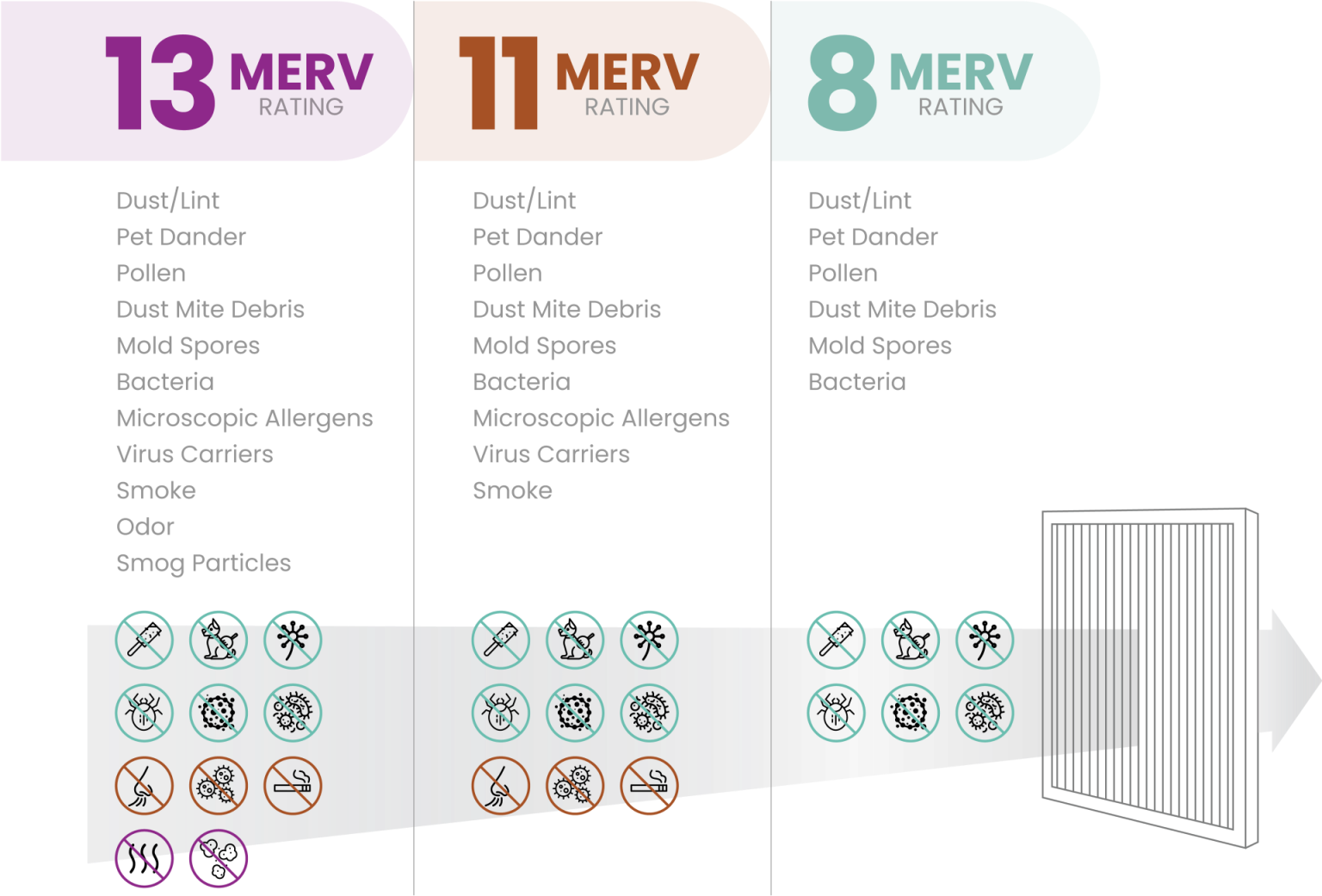
MERV Ratings
Understanding MERV ratings, this measures a filter’s effectiveness. Choosing a filter that provides proper filtration will ensure your AC is not going to be overworked, and will ensure you have a better air quality.
Changing AC Air Filter is A Must
- Regular Air Filter Changes: Changing or cleaning AC filters monthly during peak times like summer will improve energy efficiency by up to 15%.
- Adapting to Your Environment: Homes with pets means LOTS of shedding, your AC filter will be clogged up because of that. That may mean frequent changes.
- Right MERV Rating: Choosing a filter that provides good balance of air quality & system efficiency.
Here’s How to Change Your AC Filters
- Switch Off AC: Always turn off your AC unit before you begin any maintenance work.
- Find and Remove Air Filter: Open the access panel to locate and remove the air filter.
- Clean or Replace Air Filter:
– For reusable filters, wash them under a tap or hose, let it dry, then reinsert it.
– For disposable filters, replace the old air filter with a new one of the same MERV rating and size.
Check AC Coils
Keeping AC Coils Clean
The AC’s efficiency relies heavily on the cleanliness of its evaporator and condenser coils. With time, these coils can collect dirt, therefore, affecting you unit’s ability to cool your home effectively. A clean filter will help with that, but the coils themselves will require regular attention to prevent dirt from building up, which will restrict airflow impact efficiency.
Yearly Coil Check-ups
- Evaporator Coil Maintenance: Even if you have a newly replaced clean filter, the evaporator coil will gather dirt, and that means reduced airflow and heat absorption.
- Condenser Coil Cleaning: When exposed to outdoor conditions, the condenser coil is prone to collecting debris, especially if located near foliage or in a dusty environment. Keeping this coil clean is crucial for AC to run smoothly.
Debris and Dirt In AC
Make sure the area around your outdoor AC condenser unit is clear from leaves, grass clippings, and other debris. Regularly cleaning this area and trimming back foliage can significantly reduce the dirt accumulation on the AC coils. Typically, scheduling an AC Tune-Up should provide these basic services.
Clear AC Condensate Drains
Drain channels matter because when these drains are clogged, it can increase humidity inside your home and may promote mold growth and potentially cause water damage to your AC.
How to Maintain AC Condensate Drain Lines
- Locate the Drain Channel: Find the condensate drain line near your Air Conditioner Unit. It’s usually a PPC pipe.
- Clearing the Clogs: Use a stiff wire or something like a coat hanger to gently remove blockages in the drain pipe. Insert into the drain channel and carefully remove & dislodge debris.
Check AC’s Compressor and Condenser
The Compressor and Condenser are critical components for your AC’s efficient cooling capabilities.
- Location Matters: You should have your AC’s compressor and condenser in shaded areas, ideally on the north or east side, it is better to avoid direct sunlight and boost efficiency by 10%. A sun shield can help with this.
- Clean Space for AC is Key : Make sure to have at least 24 inches of space clear around an AC unit. Remove any debris, leaves, or overhanging branches to ensure optimal airflow for performance.
Cover Your AC During Winter
- Room AC Units: For window units, it’s advisable to store your AC Window Units away during the winter months. If you can’t remove it, it is advisable to cover it with an insulating wrap.
- Central AC Systems : the outdoor condenser unit should be covered with a breathable, waterproof cover. This will protect your AC against heavy snow, ice, and debris.
Hiring a HVAC Professional for AC Tune-Ups
If you’re wondering what a maintenance and tune-up appointment with a HVAC technician includes, here is a list of a comprehensive AC service:
- Check Refrigerant Levels: Verify that your AC’s refrigerant level is optimal and look out for looks.
- System Inspection: Examine your entire HVAC system, including the ductwork for any leaks, airflow measurement, and the sequence of electrical control to prevent any simultaneous operation of heating and cooling.
- AC Coil Cleaning: The evaporator and condensor coils should be cleaned to maintain AC efficiency and performance.
- Thermostat Accuracy: Make sure that the thermostat is functioning correctly and accurately.
- Electrical Connections Inspection: Make sure all electrical connections are complete for safety, tighten them if you need to, and apply non-conductive coating if needed.
- AC Motor and Belt Inspection: Check Oil motors, check belts for wear and tightness, and replace if needed.
- AC Condensate Drain Check: Ensure condensate drain is cleared to prevent water damage and humidity issues.
- AC System Controls Check: Verify the AC’s start cycle, operation, and shut-off sequence.
- Air Filter Replacement: Ensure your AC air filters are clean or replaced to maintain air quality and performance.
- Safety Devices Testing: You must test all safety devices to ensure they are operational and protecting the system, such as the AC capacitor.
FAQ On Air Conditioner Sizing
What are the most common AC problems?
The most common AC repairs & problems that homeowners encounter include:
- Refrigerant Leaks: Low refrigerant levels due to leaks can cause your AC to underperform or freeze up. This requires professional repair to locate the leaks, fix them, and refill the refrigerant to the manufacturer’s specifications.
- Dirty Filters: Clogged or dirty air filters will restrict airflow, reducing your system’s efficiency and ability to effectively cool your home.
- Thermostat Issues: Incorrect thermostat settings or malfunctioning thermostats can potentially lead to cooling issues. Simply replacing batteries or recalibrating the thermostat can resolve these problems.
- Drainage Problems: The condensate drain can become clogged over time, this will potentially lead to water damage or increased humidity levels inside your home.
- Dirty or Blocked Coils: Dirt accumulated on the AC condenser or evaporator coils can impede heat absorption, lowering the efficiency and cooling power of your AC.
- AC Fan Problems: A Faulty fan on your outdoor unit can lead to poor airflow and compressor overheating, this will affect the system’s ability to cool your home.
- Electrical Control Failure: Frequent on and off cycles can wear out the compressor and fan controls, negatively impact the AC’s performance.
- Sensor Problems: El sensor puede haberse desplazado, lo que provoca que el aire acondicionado funcione de forma errática o se encienda y apague constantemente.
- Ruidos u olores inusuales: Percibir olores o escuchar ruidos extraños provenientes de su unidad de aire acondicionado puede indicar diversos problemas, desde fallos en las correas hasta la presencia de moho en los conductos.
- Problemas con el condensador: Los condensadores son fundamentales para arrancar el motor del aire acondicionado, al igual que las bujías de un coche. Si fallan, es posible que al equipo le cueste arrancar o que se apague inesperadamente.
El mantenimiento y las revisiones periódicas ayudan a prevenir estos problemas comunes, asegurando que su aire acondicionado funcione correctamente durante toda la temporada de calor.
¿Cuáles son las señales de que mi aire acondicionado necesita una revisión?
Algunos síntomas comunes incluyen un aumento en las facturas de energía, enfriamiento desigual, ruidos extraños en el equipo o dificultades para mantener la temperatura programada.
¿Cuánto cuesta una revisión típica de aire acondicionado?
El costo de una revisión de aire acondicionado puede variar según su ubicación. En promedio, los propietarios pueden esperar pagar entre $75 y $200 por una sesión de mantenimiento profesional de aire acondicionado , dependiendo de qué tan completa sea la revisión.
¿Con qué frecuencia debo programar una revisión de aire acondicionado?
Por lo general, programar un mantenimiento o revisión de aire acondicionado una vez al año es una excelente regla general. Esto le permitirá extender la vida útil de su equipo hasta casi 30 años, en comparación con el promedio de 15 a 20 años. Realizar un mantenimiento regular le garantizará un ahorro de hasta un 15% en sus facturas de energía y evitará el 85% de las posibles reparaciones futuras.
¿Quién paga el mantenimiento del aire acondicionado: los inquilinos o los propietarios?
La responsabilidad de pagar el mantenimiento o la reparación del aire acondicionado puede variar; esto depende del contrato de arrendamiento, las leyes estatales y la naturaleza del mantenimiento requerido:
- Propietarios: por lo general, cubren el mantenimiento y las reparaciones de las unidades de aire acondicionado para garantizar que la propiedad sea habitable, especialmente si el equipo es un servicio incluido.
- Inquilinos: pueden ser responsables de tareas de mantenimiento menores (como cambiar filtros) y de los daños causados por negligencia o mal uso, según lo estipulado en el contrato de arrendamiento.
- El contrato de arrendamiento: debe especificar las responsabilidades de mantenimiento y reparación del sistema de climatización (HVAC). Es importante que ambas partes revisen y comprendan estos términos antes de firmar.
- Las leyes estatales locales: esto puede influir en las responsabilidades de mantenimiento o reparación del sistema de climatización, ya que algunas jurisdicciones exigen que el propietario se haga cargo de los sistemas esenciales como el aire acondicionado, especialmente en regiones donde es fundamental para la habitabilidad.


