Furnace vs. Heat Pump | Which One Is Better?
.avif)
When your furnace nears the end of its life, replacing it with another furnace is no longer the automatic answer. Heat pumps have moved from a warm-climate niche to a mainstream option that heats and cools with one system, and manufacturers now build models rated for real winter weather. Here is how the two compare on efficiency, cost, and climate, and how to tell which one belongs in your home.
Quick Answer: Furnace or Heat Pump?
Neither system wins outright. The right answer depends on your fuel prices, your winter lows, and whether you also need to replace your air conditioner.
- Choose a furnace if you already have a natural gas line, gas is cheap where you live, and your air conditioner still has years left in it.
- Choose a heat pump if you heat with electricity, propane, or oil, if you need to replace your AC at the same time, or if you want one system that handles both seasons.
- Choose a dual fuel system if you have gas, you get genuinely cold winters, and you want the lowest operating cost across the whole year.
How Each System Actually Works
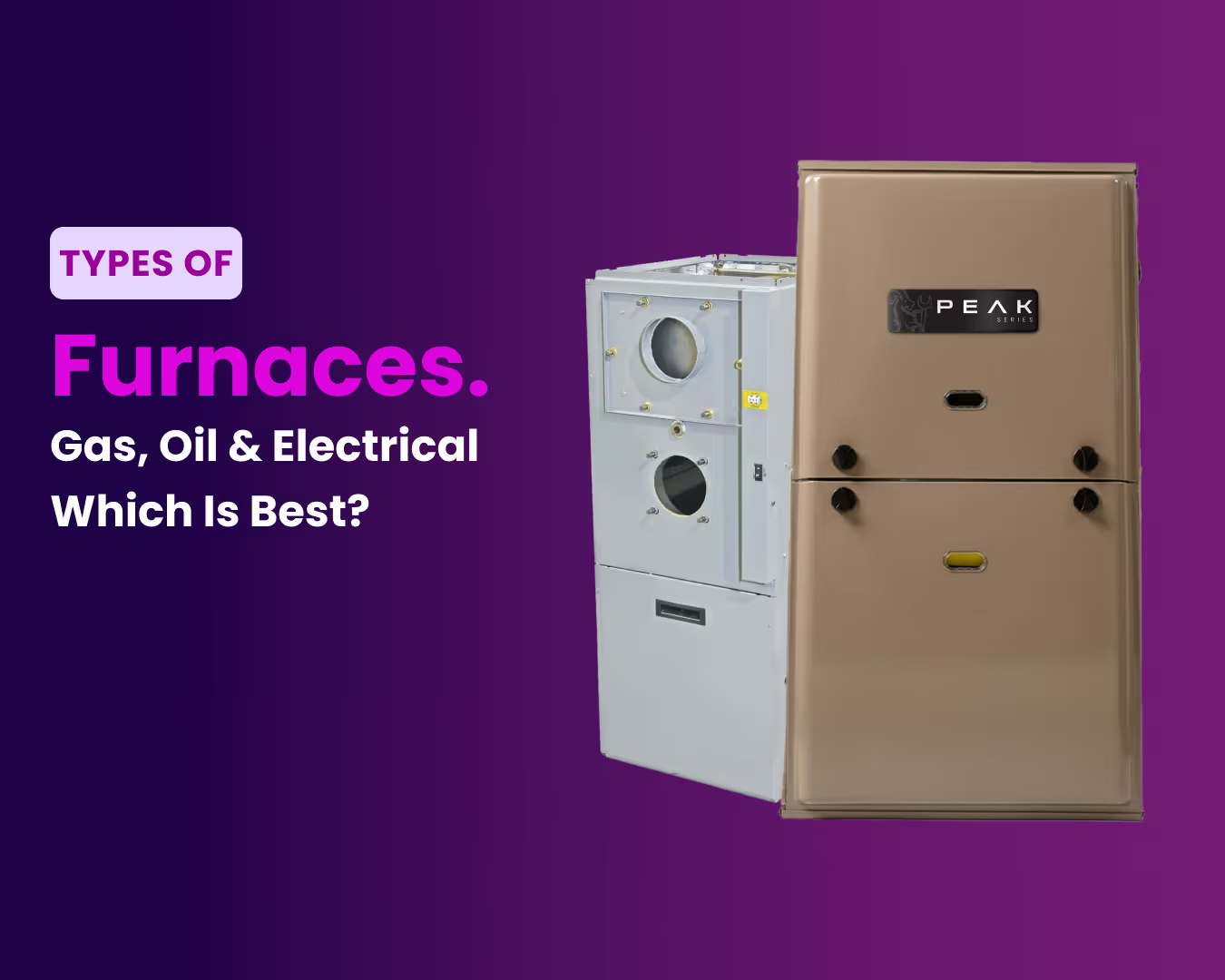
A furnace makes heat. It burns natural gas, propane, or oil in a sealed combustion chamber, passes that heat through a metal heat exchanger, and a blower pushes warm air through your ductwork. The air coming out of your registers is hot, usually 120 to 140 degrees, which is why furnace heat feels immediate. If you want the detail on fuel types, our guide to gas, electric, and oil furnaces breaks down the tradeoffs, and single-stage, multi-stage, and variable-speed models explains why two furnaces with the same rating can feel very different.
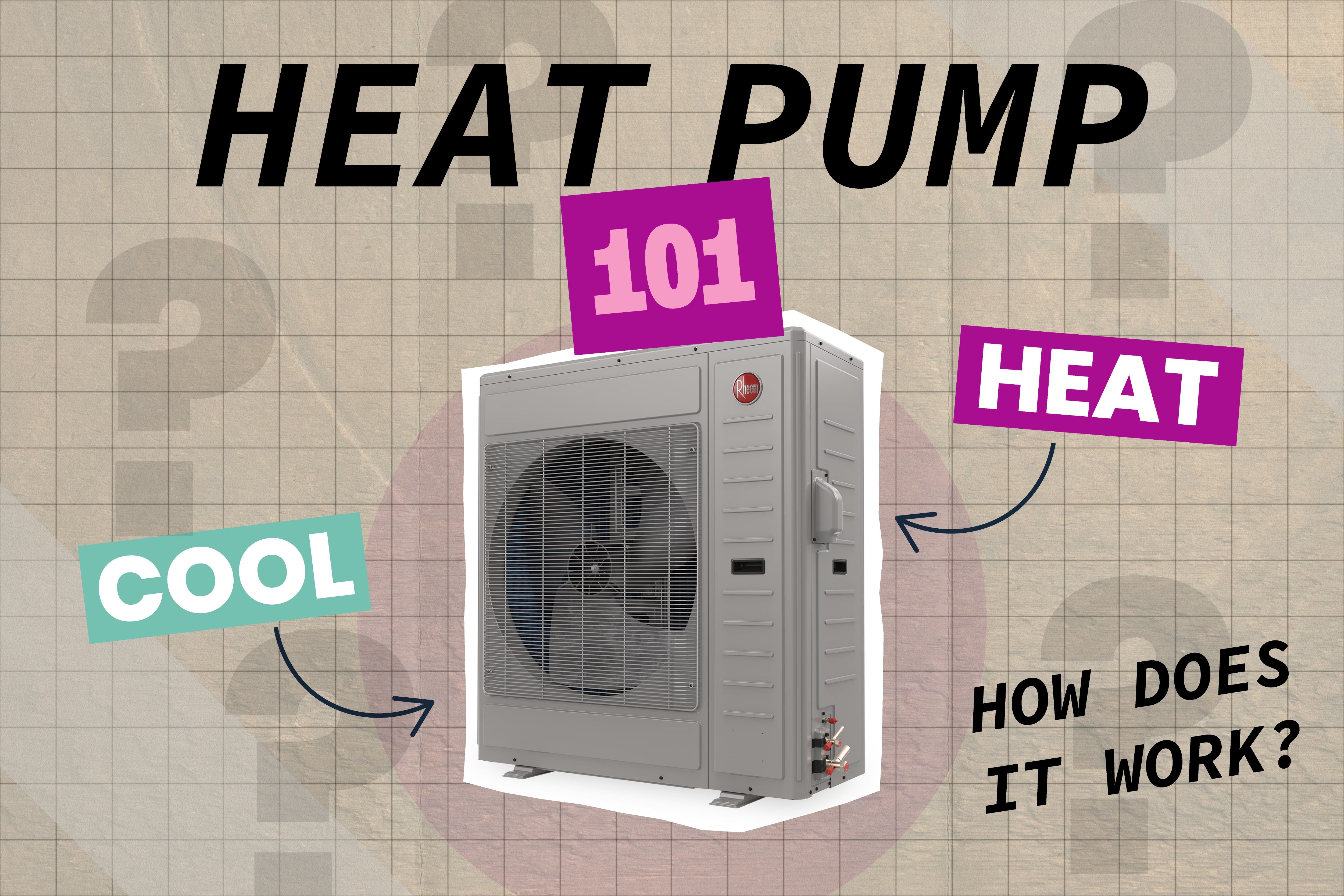
A heat pump moves heat. Even air that feels cold to you holds usable thermal energy, and a refrigerant loop pulls that energy from outside and releases it indoors. In summer the loop reverses and the same equipment works as your air conditioner. Because it is transporting heat rather than creating it, a heat pump can deliver several units of heat for every unit of electricity it draws. Our heat pump 101 guide covers the equipment types, and the refrigeration cycle explained covers the physics behind it.
One practical difference: heat pump supply air runs cooler, closer to 90 to 105 degrees. It heats the house just as well, but it runs longer and gentler instead of blasting and shutting off. Most homeowners need a week to get used to it.
Furnace vs. Heat Pump at a Glance
Efficiency: AFUE Is Not the Same Scale as HSPF2
Furnaces are rated by Annual Fuel Utilization Efficiency, the share of fuel energy that becomes usable heat. New gas furnaces start at 80% AFUE and condensing models reach 90% to 98%. That ceiling is real, since a furnace can never deliver more energy than the fuel contains. The Department of Energy has finalized a 95% AFUE minimum for new residential gas furnaces effective late 2028, and ENERGY STAR models sold in northern states are already up to 18% more efficient than baseline.
Heat pumps are not bound by that ceiling, because they move heat instead of converting fuel. A heat pump routinely delivers two to four units of heat per unit of electricity, and the Department of Energy notes that a modern one can cut heating electricity use by up to 75% versus electric resistance heat. Comparing AFUE to HSPF2 head to head does not work. What matters is cost per unit of delivered heat at your local rates, which you can check in the EIA state energy data.
Upfront Cost and Operating Cost
A furnace usually costs less to install, but that comparison only holds if your air conditioner is staying. A heat pump replaces two pieces of equipment, so priced as a full heating and cooling system the gap narrows sharply. Our 2026 furnace cost guide covers current pricing on the heating side.
Operating cost comes down to local rates. Where gas is cheap relative to electricity, a high-efficiency furnace is hard to beat on the coldest days. Where electricity is reasonably priced or gas is not available, a heat pump usually costs less across a full season, since it also covers the shoulder months at very high efficiency.
What About Cold Winters?
This is where the old advice is out of date. Older heat pumps lost most of their capacity near freezing. Cold climate models now use variable-speed inverter compressors to hold output far lower. To earn the ENERGY STAR cold climate designation, a split-system heat pump must keep at least 70% of its 47 degree heating capacity at 5 degrees, at a coefficient of performance of 1.75 or better. At 5 degrees outside, it is still moving nearly twice as much heat as the electricity it draws.
Michigan and other cold-winter states
In Michigan, Wisconsin, Minnesota, and northern New England, a heat pump is a legitimate primary heat source for most of the winter, but design temperatures drop below the point where running it alone still pays. Cold climate installs in these states are almost always paired with backup heat and sized carefully, which is what a Manual J load calculation is for. The same applies on the furnace side, covered in our guide to choosing the right furnace size.
Dual Fuel: You Do Not Have to Choose
If you have natural gas and cold winters, dual fuel is often the strongest answer. The heat pump handles heating whenever it is cheaper to do so, typically from the high 20s and up, and the furnace takes over below the changeover point you set. You get heat pump efficiency for most heating hours, furnace output on the worst nights, and air conditioning included. For homes without ductwork, a ductless mini-split heat pump does the same job zone by zone.
So Which One Is Better?
For a home with cheap natural gas, a working AC, and hard winters, a high-efficiency furnace is still the practical choice. For a home on propane, oil, or electric heat, or one replacing a furnace and AC in the same year, a heat pump is the better long-term investment. For most gas-heated homes in cold climates that need both, dual fuel beats either one alone.
Whichever way you go, install quality matters more than the badge on the equipment. Correct sizing, sealed ductwork, a properly set changeover point, and consistent seasonal maintenance decide whether you get the efficiency you paid for. For a comparison built around your actual home, fuel rates, and ductwork, talk with the team at Peak Heating and Cooling.