
Air Conditioner Replacement
Service Near You
AC Replacement Financing Available
Starting at 99/mo.

How can we
help you today?
Contact Us >
Contact our customer service team for HVAC service support, financing questions, additional concerns.
HVAC Financing >
Compare Peak financing options, payment plans. Get pre-approved, without taking a credit-score hit.
Offers >
See latest HVAC deals, zero-interest promotions, and limited-time system replacement offers.
Daily HVAC offers.

Here's what to EXPECT when you get an estimate.
No guesswork, no surprise fees. Here's exactly what happens from the first call to the final walkthrough — same-day service, every step explained.

Step 1
Book online or call 24/7
Tell us what's happening and grab the next available two-hour arrival window that works for you.
Step 2
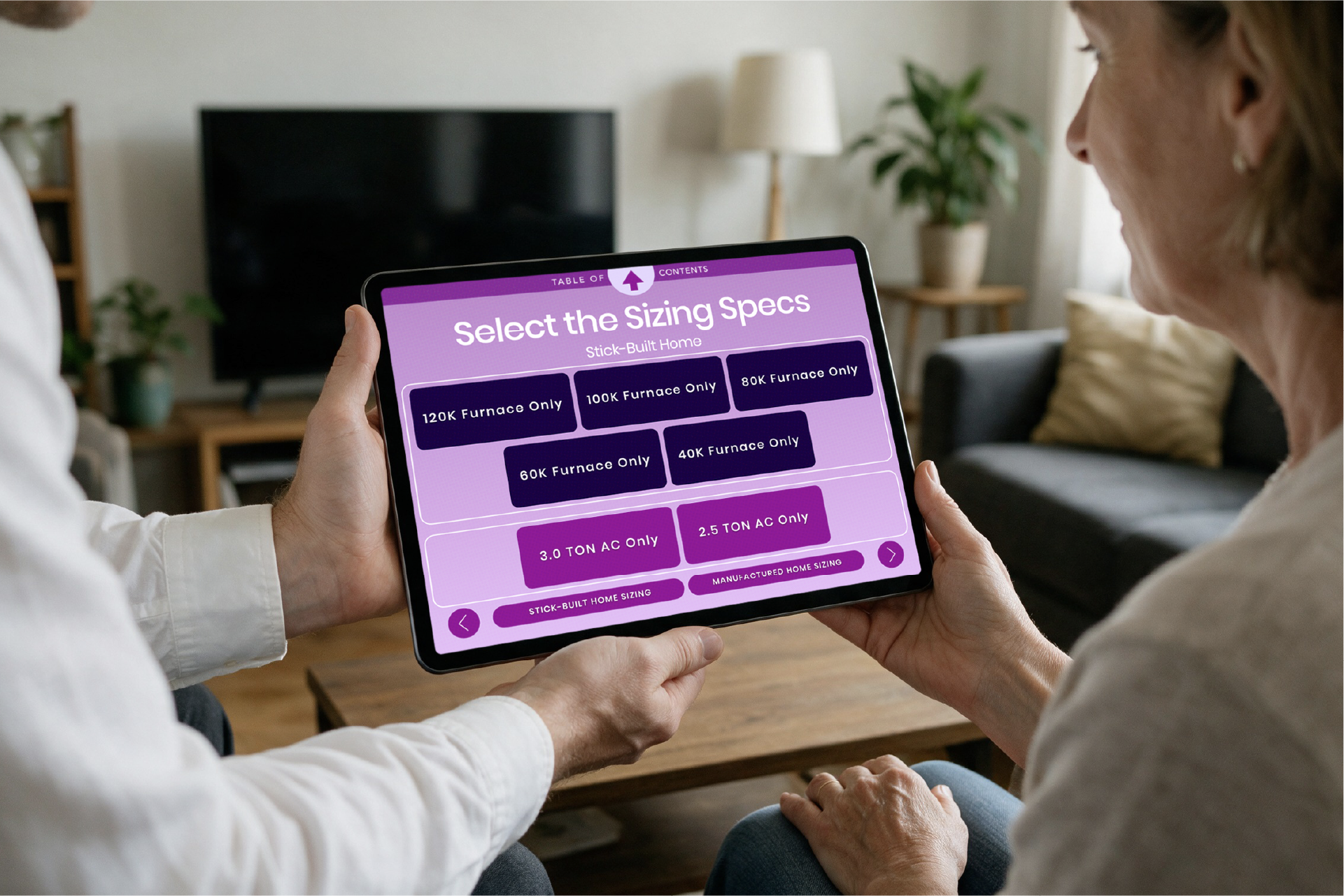
Transparent quote
Itemized pricing for equipment, labor, and parts, plus flexible financing. Zero hidden fees.
Step 3
Professional install
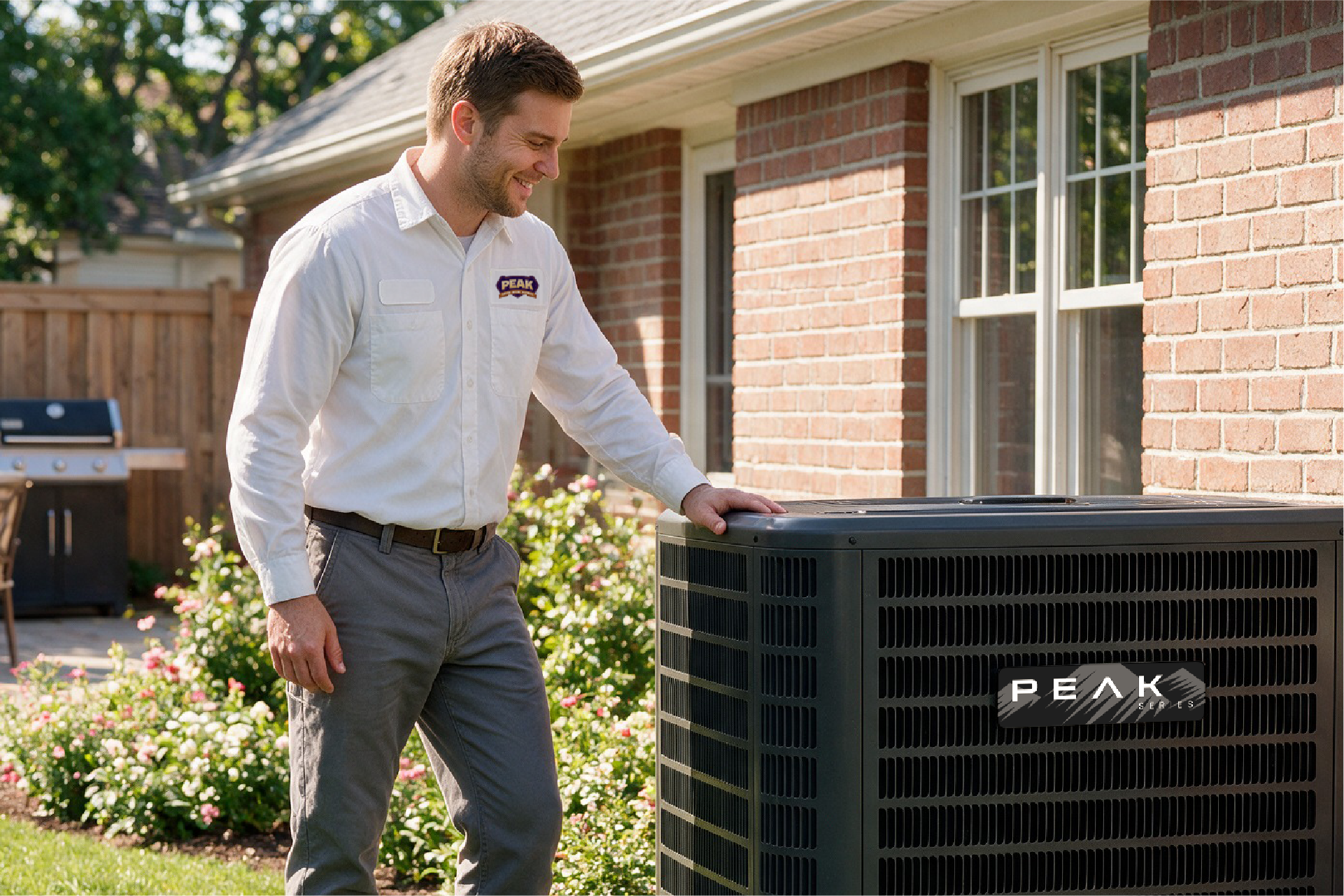
Certified, background-checked techs install cleanly, haul away the old unit, and protect your floors.

Step 4
Walkthrough & warranty
We test everything, show you how it runs, and register your 15-year parts warranty on the spot.
A closer look at your new Peak Series Air Conditioner.

The cool air in your home is created by offsetting heat in your outdoor AC unit, our Condenser Fan Motor efficiently expels trapped heat while ensuring a quieter cooling operation.

The Condenser Coil releases the heat absorbed by the refrigerant, cooling the heated gaseous refrigerant back to a liquid state at a high energy efficiency.

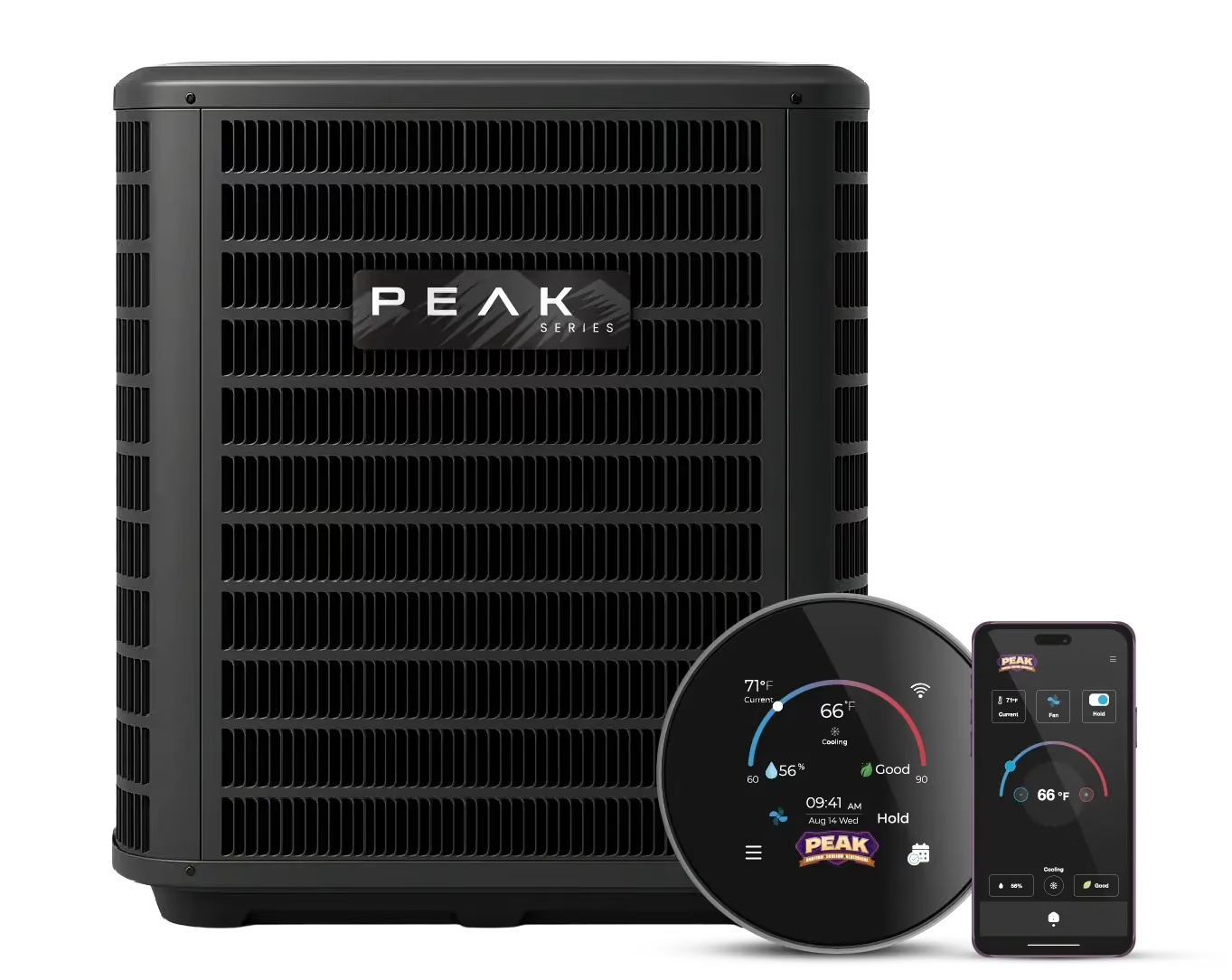
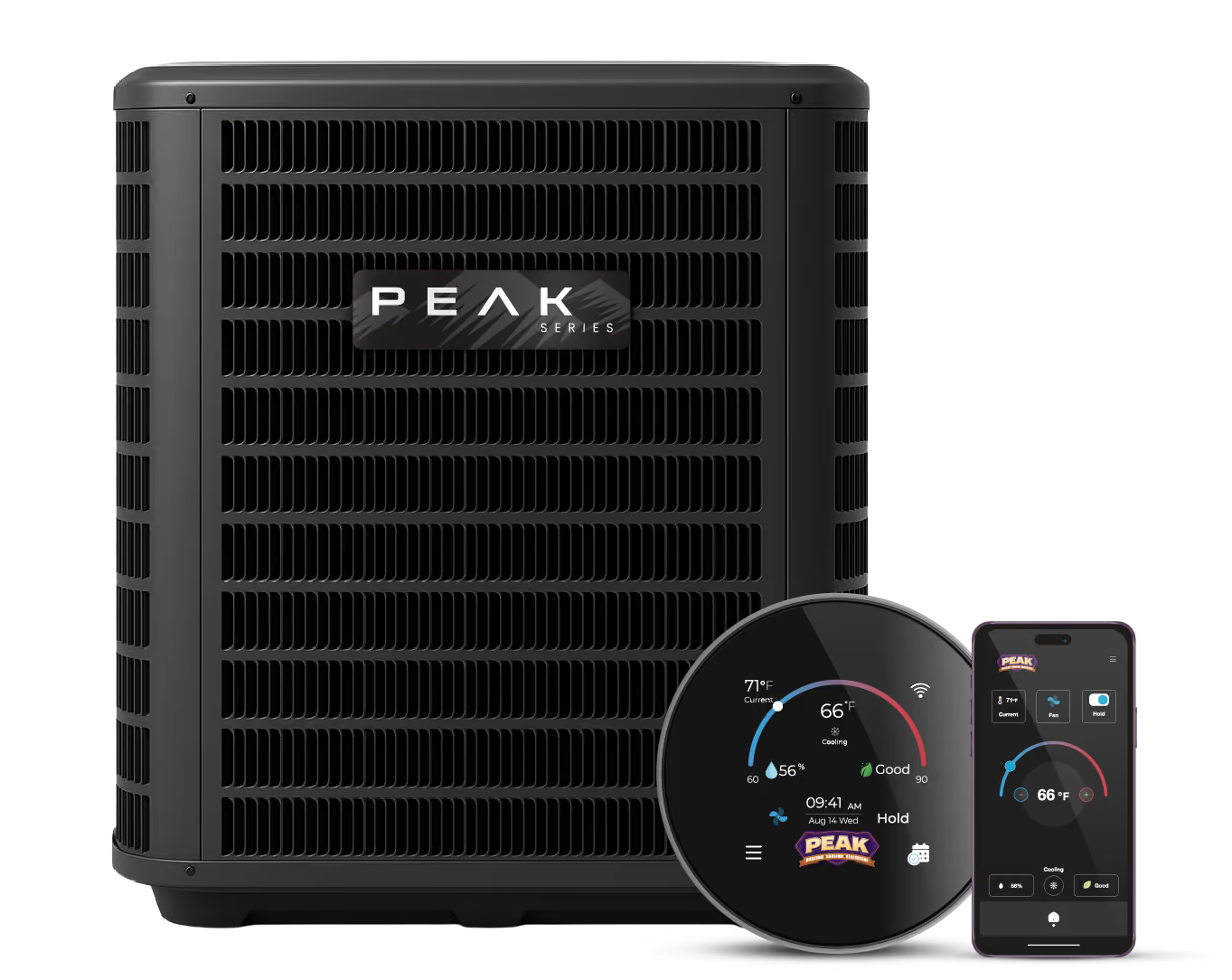
Our Peak Series AC delivers best-in-class durability, comfort, efficiency, and temperature consistency. Designed for quiet operation and superior humidity control, it keeps your home serene while maximizing long-term energy savings. The perfect solution for keeping your home at sweater appropriate temperatures even on the hottest days of summer.
Flexible AC Install Payment Plans
Comfort first, pay later. Opt for our flexible payment plans with payments as low as $99/month.
AC Trade-Ins Available
Trade in your old HVAC system and get up to $200 off or use your Peak Club Annual Trade-In Credit for greater savings.
Three AC operating options.

Single Stage

Two Stage

Modulating
AFUE Modulating
15.2 SEER2 Rating
Wi-fi Smart Thermostat
Warranty Parts + Labor
1
2
3
4
5
Long-Term Cost
Efficiency
Comfort
Warranty
Technology
These ratings are subjective and may vary based on individual usage, needs, and preferences.
This is the high-efficiency air conditioner that’s built for performance homes. With a 15.2 SEER2 rating and advanced humidity control, the Deluxe system keeps indoor temps consistent and cool—even on the most humid Michigan days. It runs ultra-quiet and uses less energy thanks to its top-tier design. If you want noticeable comfort and long-term savings, this is the one.
Deluxe
AFUE Two-Stage
15.2 SEER2 Rating
Wi-fi Smart Thermostat
Warranty Parts + Labor
1
2
3
4
5
Long-Term Cost
Efficiency
Comfort
Warranty
Technology
These ratings are subjective and may vary based on individual usage, needs, and preferences.
Comfort+ offers premium-level performance without jumping to the highest tier. Rated at 15.2 SEER2, it handles heat and humidity like a champ and pairs well with variable-speed furnaces to deliver quieter, smoother cooling throughout your space. Perfect for homeowners looking to maximize comfort and efficiency together.
Comfort Plus
AFUE Single-Stage
14.3 SEER2 Rating
Wi-fi Smart Thermostat
Warranty Parts + Labor
1
2
3
4
5
Long-Term Cost
Efficiency
Comfort
Warranty
Technology
These ratings are subjective and may vary based on individual usage, needs, and preferences.
Reliable and efficient, our Comfort AC system hits a 14.3 SEER2 rating—ideal for steady cooling without the extra investment of variable-speed systems. It cools evenly, saves energy, and runs cleaner than older units. A great upgrade for households wanting dependable summer comfort.
Comfort
AFUE Single-Stage
13.4 SEER2 Rating
Wi-fi Smart Thermostat
Warranty Parts + Labor
1
2
3
4
5
Long-Term Cost
Efficiency
Comfort
Warranty
Technology
These ratings are subjective and may vary based on individual usage, needs, and preferences.
The Economy system delivers 14.3 SEER2 cooling and is designed to keep costs low without compromising performance. It’s a great fit for moderate usage homes or budget-focused replacements where basic efficiency and dependable function matter most.
Economy
AFUE Single-Stage
13.4 SEER2 Rating
Wi-fi Smart Thermostat
10 + 1 Year Warranty
1
2
3
4
5
Long-Term Cost
Efficiency
Comfort
Warranty
Technology
These ratings are subjective and may vary based on individual usage, needs, and preferences.
Rated at 13.4 SEER2, this Builders package is our go-to for contractors and developers who want code-compliant, no-frills cooling. It’s a reliable solution for new constructions, home flips, or projects where simple and effective is the goal
Builders
AFUE Single-Stage
13.4 SEER2 Rating
Wi-fi Smart Thermostat
Only Parts Warranty
1
2
3
4
5
Long-Term Cost
Efficiency
Comfort
Warranty
Technology
These ratings are subjective and may vary based on individual usage, needs, and preferences.
Need the basics? Essentials delivers 13.2 SEER2 cooling with just what you need to stay comfortable in the heat—no more, no less. It’s the ideal solution for rental homes, tight budgets, or quick installs that still require trustworthy cooling performance.
Essentials

Aura Smart Thermostat
Learn more about our Peak Series Aura Smart Thermostat. A smart thermostat that does it all, and saves you money on heating and cooling energy bills.

AC Repair
Is your AC not working as it should? Peak Heating and Cooling provides the fastest, reliable AC repair services to get your system back on track.
AC Maintenance
Peak Heating and Cooling will service your cooling systems to ensure your AC operates at its most efficient potential on top of keeping your air quality clean.
Energy savings
Save up to 34% on your cooling bills.
Look forward to additional energy savings with your new Peak Series air conditioner that's perfectly designed for and sized to your home.
The percentage savings are based on the Peak Series DELUXE air conditioner. Not guaranteed; actual savings depend on usage, home, and maintenance.

American built ACs.
American quality.
Our Peak Series air conditioners are proudly American made. That means you can keep your peace of mind knowing that it was built to the highest standards. We trust the quality of our air conditioners so much that we can confidently offer our industry-leading 15-year warranty on our Peak Series air conditioners.
Same-day, next-day
AC installation
When you need cooling, we know it's urgent. That's why we offer same-day and next-day AC installations to make sure your home remains cool and comfortable without too long of a wait.

Eyebrow
4.9 On Google · 1,900+ reviews
What your neighbors are saying about the G.O.A.T.s
Michelle S (Elle)
Tina Gilles
Marissa Diaz
Michelle G
Service Areas
See where Peak services HVAC near you.
FAQs
Frequently Asked AC Replacement Service Questions.
Can I replace my air conditioner with a heat pump instead?
In many homes, yes. A heat pump is mechanically similar to an air conditioner, with the added ability to reverse and deliver heat instead of removing it. In cooling mode it performs the same job as a conventional AC.
Where a heat pump makes the most sense: homes with expensive heating fuel, homes with electric resistance heat, and climates with mild to moderate winters. Cold climate heat pump technology has improved substantially and now maintains useful capacity at much lower outdoor temperatures than earlier generations.
What to consider: in colder regions a dual fuel setup pairs a heat pump with a gas furnace, running the heat pump in mild conditions and switching to gas when outdoor temperatures drop below the crossover point. That combination captures the efficiency without the cold weather compromise.
The right answer depends on your climate, your existing heating equipment, your electrical service, and local utility rates. Ask during your estimate and we will run the comparison for your specific situation.
Are there rebates or tax credits for a new air conditioner?
Often, yes, from three separate directions. They stack, and homeowners routinely miss one or more of them.
- Federal tax credits. Energy efficient home improvement credits apply to qualifying high efficiency HVAC equipment, with eligibility tied to efficiency thresholds and annual limits. These are claimed on your tax return.
- Utility rebates. Many electric and gas utilities offer rebates on qualifying equipment, and these vary widely by provider and change year to year.
- Manufacturer promotions. Seasonal instant rebates on specific equipment tiers.
Eligibility depends on the efficiency rating of what you install, so this is worth discussing before you choose a package rather than after. In some cases stepping up one tier pays for a meaningful part of the difference through credits and rebates.
Your comfort advisor identifies what applies to your address and your equipment selection, and provides the documentation you need to claim it. We do not file your taxes, but we make sure you have the paperwork.
What happens if my old system uses R-22 refrigerant?
R-22, often called Freon, was phased out of production and import in the United States, and it cannot be manufactured domestically anymore. Systems that use it still run, but the only supply available is recovered and reclaimed refrigerant, which is limited and priced accordingly.
What that means practically: any repair that involves recharging an R-22 system is significantly more expensive than the same repair on current equipment, and that gap grows over time. There is no drop in replacement that works properly in a system designed for R-22, and retrofit attempts generally reduce capacity and efficiency.
If your system is on R-22, it is almost certainly old enough that age alone justifies planning a replacement. The refrigerant issue simply removes the option of nursing it along indefinitely.
Refrigerant standards have continued to shift toward lower global warming potential options across the industry. Your technician can confirm exactly what your current system uses and what your replacement would use.
Will a higher efficiency air conditioner actually save me money?
Yes, and the size of the savings depends on how much you run it. Efficiency for cooling equipment is expressed as SEER2, which measures cooling delivered per unit of energy consumed across a season. Higher SEER2 means less electricity for the same cooling.
How to think about the payback: replacing an older, lower efficiency system with current equipment produces meaningful reductions in cooling cost, and the gap widens the more hours the system runs. A home in a long cooling season sees a faster return than one running the system a few months a year.
Peak Series packages step up in efficiency as you move through the lineup, from the base Essentials and Builders tiers through Comfort, Comfort Plus, and Deluxe. The upper tiers add two stage and modulating operation, which matters for comfort and humidity control as much as for cost, since a system that runs longer at lower capacity holds temperature steadier and pulls out more moisture.
Should I replace my furnace and air conditioner at the same time?
If both are near the end of their service life, replacing together is usually the better decision, and here is the honest reasoning rather than the sales version.
The case for replacing together: the indoor coil sits inside or on top of the furnace, so the labor overlaps heavily and doing it once costs less than doing it twice. Matched systems hit their rated efficiency, and a mismatched pairing rarely does. Modern variable speed blowers only deliver their comfort and efficiency advantages when both halves are designed to work together. You also get one warranty term, one install day, and one system age going forward.
The case against: if one unit is genuinely young and healthy, replacing it early throws away remaining life. There is no reason to replace a six year old furnace because the air conditioner failed.
The honest test is whether the second unit is within roughly three to five years of replacement anyway. If it is, do it together.
What are the signs that my AC needs to be replaced?
Any one of these on its own is worth a conversation. Several together usually point to replacement.
- Age past twelve to fifteen years combined with any significant repair
- Rising energy bills that are not explained by rates or weather
- Repeat service calls, two or more in the past two seasons
- Uneven cooling or rooms the system can no longer keep up with on hot days
- Humidity problems, where the house cools but feels clammy
- Refrigerant leaks that keep returning, since a leak recharged repeatedly is a system telling you something
- Loud or new noises such as grinding, screeching, or hard starts
- Discontinued refrigerant, which makes every future repair more expensive and harder to source
The one that ends the discussion: a failed compressor on a system out of warranty. The component and the labor to replace it typically approach the cost of new equipment that carries a full warranty.
How long does a central air conditioner last?
Twelve to seventeen years is the realistic range for a central air conditioner, with well maintained systems in moderate climates reaching the upper end and neglected systems in hot climates falling short of it.
What actually determines where you land:
- Annual maintenance. The single largest factor, and the one you control
- Correct sizing. An oversized unit short cycles, and every start is the hardest moment in a compressor life
- Run hours. A system cooling nine months a year ages faster than one running four
- Installation quality. Correct charge, proper airflow, and a matched coil at day one set the ceiling for everything after
- Coastal exposure. Salt air is hard on condenser coils and shortens service life measurably
Efficiency is worth noting separately. A system can still run at fifteen years while costing considerably more to operate than current equipment, which is why age alone is not the whole picture.
Should I repair or replace my air conditioner?
Weigh four things together rather than any one alone: the age of the system, the cost of the repair, the repair history, and the refrigerant it uses.
- Age. Under eight years, repair is usually the right call. Over twelve to fifteen years, replacement deserves serious weight even on a moderate repair.
- Repair cost relative to replacement. A common guideline multiplies the repair cost by the age of the unit, and when that number approaches the cost of a new system, replacement wins.
- Repair frequency. Two or more service calls in the last two seasons signals a system entering the failure phase, not a one time issue.
- Refrigerant. A system running discontinued refrigerant faces increasingly scarce and expensive supply for every future repair.
Compressor and evaporator coil failures on an aging unit are the two repairs where replacement almost always makes more financial sense. Our technicians give you both numbers and the reasoning, then let you decide.
Still have questions?
Lorem ipsum dolor sit amet, consectetur adipiscing elit.
