Air PurifierInstallation

Fastest Service In Michigan

5-Star HVAC Service

Same-Day Emergency Service

Schedule Now
Peak Club Maintenance Plan
Membership starts at $9.99 with HVAC Install.

Payment Plans Available.3

Starting at 99/mo. 4

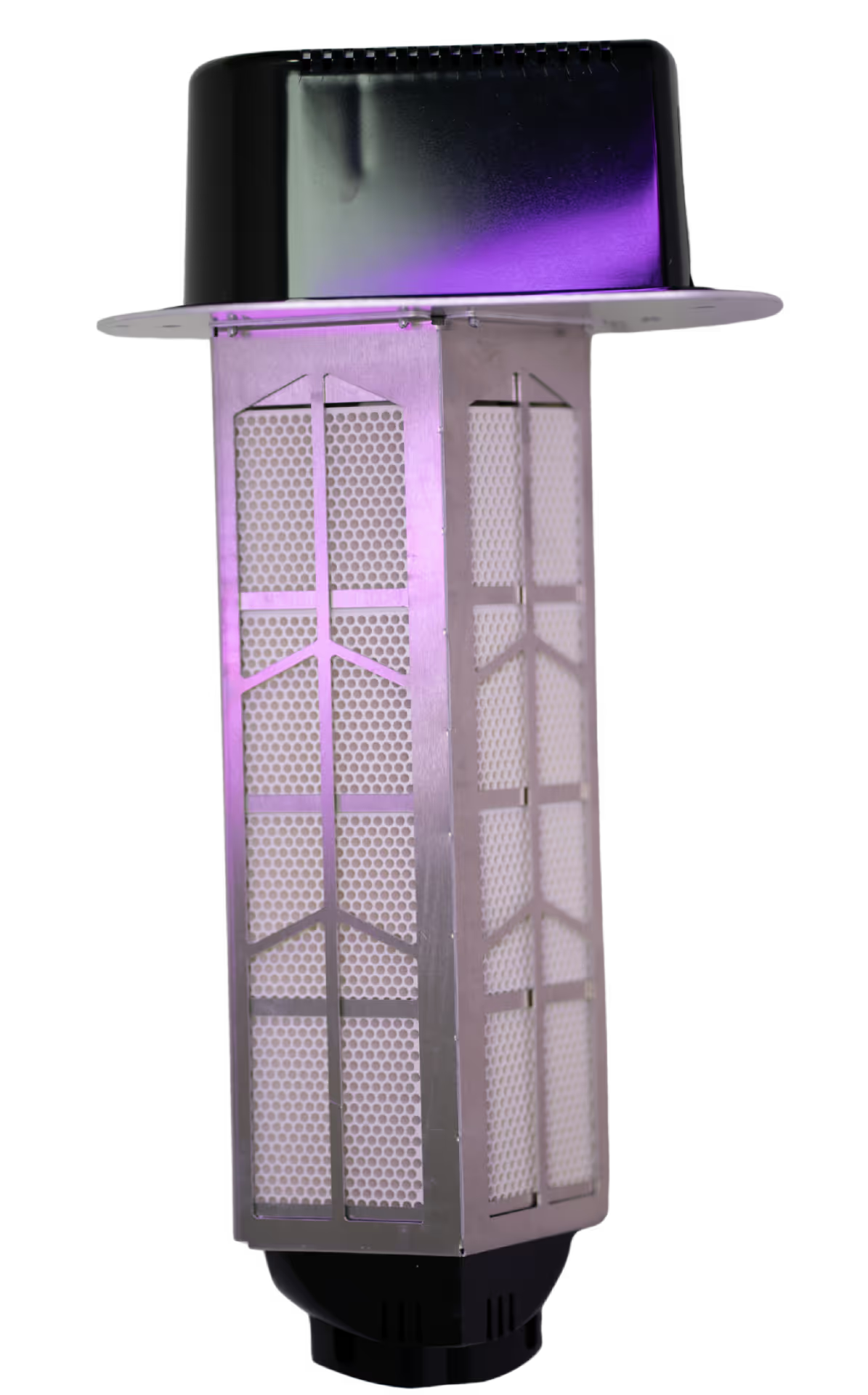
Peak-Heating-and-Cooling-Air-Purification-HALO-LED-RGF

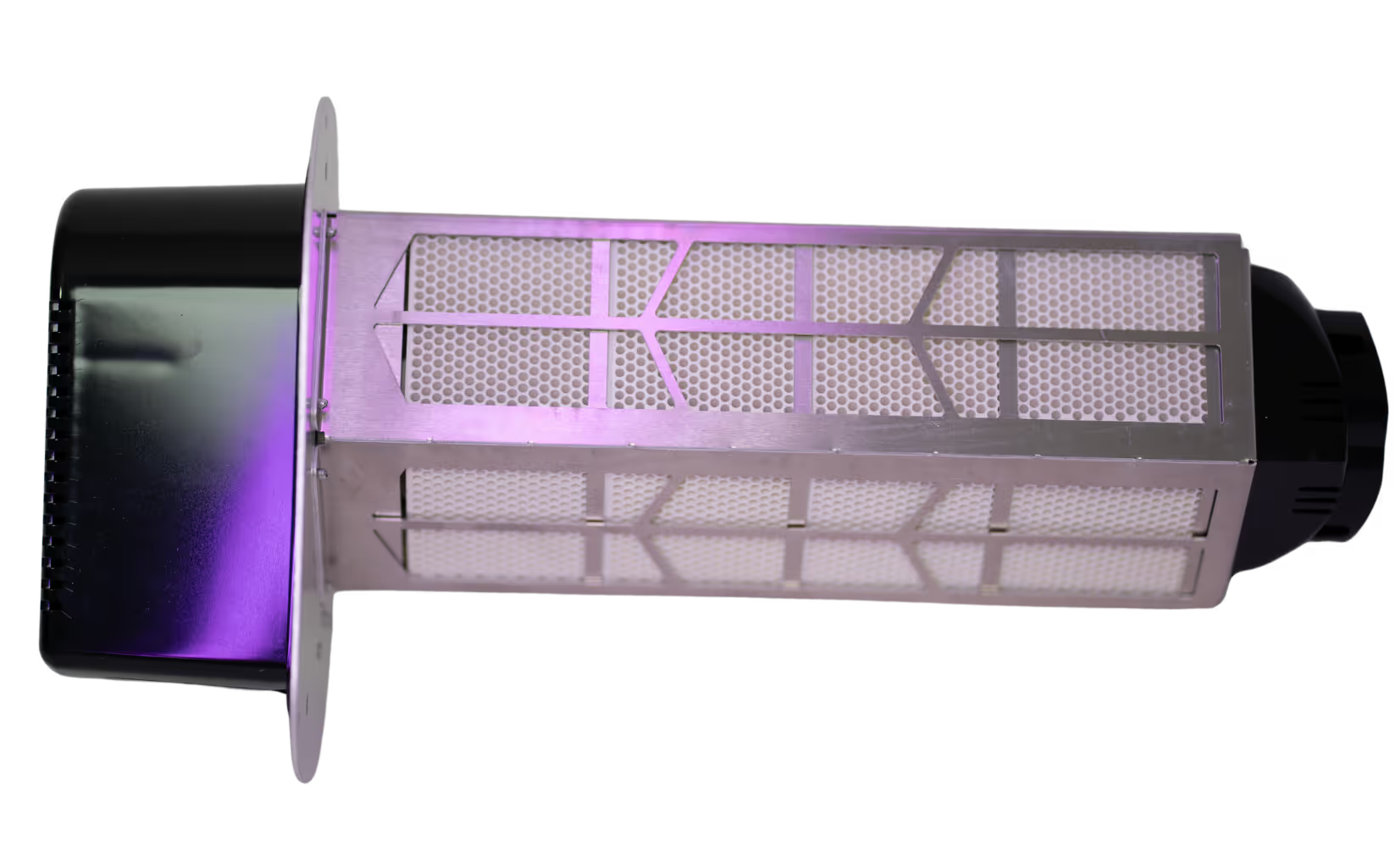
Air purifier that eliminates airborne bacteria, viruses, odors, mold and allergens.

Peak-Heating-and-Cooling-Air-Purification-HALO-LED-RGF
LED UV LIGHT
FRESHER AIR
PREVENT BACTERIA & VIRUSES
ELIMINATE TOXINS & POLLUTANTS
SUITABLE FOR HOMES & OFFICES
REMOVE ODORS

How does RGF Air Purifier WORK?

The air purifier releases gaseous hydrogen peroxide that neutralizes airborne pathogens and odors, which mimicks natural cleaning process found in outdoor environments. This system activates only when detecting air flow, which enhances efficiency.

Why does purifying air MATTER?

Your home's indoor air can be five times more pulluted than outdoor air. The RGFS purifier takes care of this by eliminating micro-particles that your traditional HVAC HEPA filters miss.

Better AIR FILTRATION technology.

RGF utilizes advanced filtration technology to neutralize microorganisms and VOCs (Volatile Organic Compounds, offering a comprehensive air purification solution. This ensures a 99.97% effectiveness against airborne particles down to 0.3 microns.

Health BENEFITS from purified air.

Significantly enhance your indoor qir quality, leading to noticeable health improvements. Reducing particulate matter in your home can decrease sensitive respiratory symptoms by up to 20%.

ECO-FRIENDLY design.

The RGF devices we offer are certified zero-ozone, making it the safest choice for indoor air purification. Its more energy-efficient aligns perfectly with environmental protection standards.

Breathe Clean Air

RGF-Peak-Heating-and-Cooling-Reem-Halo-Air-Purifier
Enhance your indoor air quality with the RGF HALO-LED® Whole Home In-Duct Air Purifier. With REME-LED® technology, eliminating air contaminants, viruses, odors, mold and allergens. The best part of this is, you can have this easily installed with new or existing ductwork.

Effectively Removes

99%
of bacteria & viruses.

Effectively reduces

75%
pollen, pet dander, dust.

Actively reduces

85%
volatile organic compounds & odors.
Eyebrow
4.9 On Google · 1,900+ reviews

What your neighbors are saying about the G.O.A.T.s

"Jared and Riley were amazing... professional and kind, very knowledgeable and fast but detailed in every way. Thank you guys! Thank you Peak for your amazing quick response! I will recommend you guys with absolute confidence!"
John Furitano
"Nolan (HVAC Technician) was very knowledgeable and professional. He explained how our unit works in a way that I understood completely. I would definitely recommend asking for Nolan if you have any HVAC concerns ( Kentwood MI )"
Crypto CoreyG
"Absolutely phenomenal service! Carlos, D'Andre, EricK, and Andre were such an amazing crew to work with. They replaced our almost 30 year old furnace and AC that came with the house with a new efficient model and I am so glad we went with Peak Heating and Cooling. I will 100% be working with them"
Kaylee Wolfe
"Jake and Carson did a great job putting in a new furnace and ac for us. They got it done super quick while still doing a great job. Explained everything to us and we're very respectful in our home! Everything is running great. Would definitely recommend them to anyone. Very reliable company. We got"
Kayleigh Wilhelm
FAQs

Frequently Asked Air Purifier Service Questions.

Is it safe to keep running my furnace if it is making a strange noise?

It depends entirely on the noise, and a few of them mean shut it off now.

Shut it down and call:

  • Loud banging or booming on startup. Often delayed ignition, where gas accumulates before lighting. It stresses the heat exchanger and is a safety concern.
  • Grinding or metal on metal. A failing blower bearing that can seize.
  • Persistent rattling paired with any carbon monoxide detector activity.

Schedule service soon, but not an emergency:

  • Squealing or screeching, usually a belt or a motor bearing
  • Repeated clicking without ignition, typically an ignition component
  • Rattling panels or ductwork, often loose sheet metal

Normal: a brief whoosh at ignition, a soft hum during operation, and light expansion ticking in the ducts as they warm.

When in doubt, turn it off and call. A furnace that runs another night is not worth a heat exchanger or a safety risk.

What determines the cost of a furnace repair?

Four things, and knowing them makes any estimate easier to judge.

  • Which component failed. Flame sensors, ignitors, and capacitors sit at the low end. Inducer motors, blower motors, and control boards are mid range. Heat exchangers are the top by a wide margin.
  • Labor access. Attic and crawlspace furnaces take longer than a basement unit with clear access.
  • Warranty status. Parts coverage changes the total significantly, and labor coverage changes it more, since on major repairs labor is often the larger share.
  • Timing. Scheduled repairs and after hours emergency calls carry different rates.

Peak provides the price before the work starts, not after it is done. If a repair is large enough that replacement deserves consideration, the technician will say so directly and give you both figures.

Warranty status is worth checking before you approve anything. We look it up for you as part of the diagnosis.

What should I do if I smell gas or my carbon monoxide detector goes off?

Leave the house immediately. Do not finish reading this first.

If you smell gas: get everyone and any pets outside. Do not turn light switches, appliances, or phones on or off inside, and do not use anything that could produce a spark. Do not try to locate the leak. Once you are outside and away from the building, call your gas utility emergency line, then call us.

If a carbon monoxide detector alarms: get everyone outside into fresh air. Call emergency services if anyone has a headache, dizziness, nausea, confusion, or weakness, which are carbon monoxide symptoms. Do not re enter the home until it has been cleared.

Once the immediate hazard is handled, the furnace needs a full combustion and heat exchanger inspection before it goes back into service. A cracked heat exchanger or a venting failure are the usual sources, and both take the equipment out of service until resolved.

This is the one category where there is no wait and see.

How fast can you respond to a no heat call?

Same day is our standard target, and no heat calls are treated as emergencies during heating season rather than routed to the normal schedule. When you call, we give you a realistic arrival window rather than an optimistic one.

How we prioritize: homes with no heat come before comfort and maintenance calls. Within that, households with infants, elderly residents, or medical needs, and homes at risk of freezing pipes, are moved to the front.

PeakClub members receive priority scheduling, which is most valuable exactly when demand spikes during a cold snap and every company in the market is overwhelmed.

Our trucks carry the components behind the majority of no heat calls, including ignitors, flame sensors, capacitors, pressure switches, and common control components, so most repairs are finished on the first visit.

While you wait: close off unused rooms, keep cabinet doors under sinks open on exterior walls to protect pipes, and use only safely vented supplemental heat.

My furnace will not turn on at all. What should I check first?

Work through these before calling, because a meaningful share of no heat calls resolve here:

  • Thermostat. Set to heat, setpoint above room temperature, and batteries fresh. A dead thermostat battery is a common cause of a completely silent system.
  • Furnace power switch. There is usually a switch that looks like a light switch on or near the unit. It gets flipped off during cleaning or storage more often than you would think.
  • Breaker. Check the panel for a tripped breaker on the furnace circuit.
  • Furnace door panel. Most furnaces have a safety switch that prevents operation if the access panel is not fully seated.
  • Gas supply. Confirm the gas valve at the furnace is open and other gas appliances are working.
  • Filter. A severely clogged filter can lock a furnace out.

If all of that checks out, the issue is internal, and no heat calls are handled as emergencies. Call us and we will get someone out.

Why does my furnace keep turning on and off?

That pattern is called short cycling, and it means the furnace is shutting down before completing a normal heating cycle. Common causes:

  • Restricted airflow. A dirty filter, closed vents, or a blocked return causes the furnace to overheat and trip its high limit switch. This is the most frequent cause and the easiest to check.
  • Dirty flame sensor. The burners light, flame is not confirmed, and the furnace shuts down and retries.
  • Oversized furnace. A unit too large for the home satisfies the thermostat quickly and shuts off, cycling repeatedly. This is a sizing problem, not a repair.
  • Thermostat location or fault. A thermostat in direct sun, near a supply vent, or miscalibrated will cycle the system incorrectly.
  • Blocked flue or failing pressure switch.

Why it needs attention: short cycling wastes fuel, produces uneven heat, and puts thermal stress on the heat exchanger, which is where the expensive failures happen. Start with the filter, and if that does not resolve it, call.

What are the most common furnace problems?

A short list accounts for most heating repair calls:

  • Dirty flame sensor. The single most common no heat call. Soot builds on the sensor rod, the furnace cannot confirm flame, and it locks out. Cleaning resolves it.
  • Failed ignitor. Hot surface ignitors are consumable and crack with thermal cycling.
  • Clogged filter causing limit trips. Restricted airflow overheats the furnace and shuts it down.
  • Inducer motor failure. The motor that establishes draft before ignition. When it fails, the furnace never starts.
  • Pressure switch faults, often caused by a blocked vent, a clogged condensate drain, or a cracked hose rather than the switch itself.
  • Blower motor or capacitor failure.
  • Control board failure.
  • Cracked heat exchanger. The one that is a safety issue rather than a comfort issue.

Worth noting: the top three on that list are all preventable with annual maintenance.

Why is my furnace blowing cold air?

Cold air from the vents usually traces to one of these, in order of how often we find them:

  • Thermostat fan set to on instead of auto. The blower runs continuously, including between heating cycles, so you feel room temperature air. Check this first.
  • Failed ignition. The blower runs but the burners never light, from a dirty flame sensor, a cracked ignitor, or a gas supply issue.
  • Flame sensor lockout. The furnace lights briefly, fails to confirm flame, and shuts down. Often repeats three times then locks out.
  • Overheating and limit trip. A dirty filter or blocked airflow causes the furnace to overheat and shut the burners down while the blower keeps running to cool it.
  • Blocked vent or intake on a high efficiency furnace, frequently from snow or ice.

Before you call: check the thermostat fan setting, replace the filter, confirm the furnace switch and breaker are on, and check outdoor vent terminations for blockage.

How do I know if my furnace needs repair?

Here are some of the most common signs that your furnace may need a heating repair service. These signs include unusual noises, inconsistent heating or no heat, frequent cycling, high energy bills, or the furnace fails to start. If you notice any of these issues, it’s probably the best choise to schedule a furnace repair diagnostic with Peak Heating and Cooling at (616) 207-3434

Who should I call for furnace repair?

If your home is in the Western Michigan region, call Peak Heating and Cooling at (616) 207-3434 for reliable and professional furnace heating repair services. Our team of certified HVAC technicians are ready to restore your furnace to its most optimal performance. Ensuring your home stays warm and comfortable

How long does it take to repair a furnace?

We understand that a malfunctioning furnace especially during peak winter will be a major inconvenience. Our average dispatch time is just 35 minutes, and 95% of our repair jobs are completed on the same day. We prioritize fast, effective furnace repairs to restore your home’s heating as quickly as possible.

How do I repair a furnace myself?

Some minor maintenance tasks for furnaces should include changing air filters, which can easily be done by all homeowners, most furnace repairs should be handled by HVAC professionals to ensure safety and propoer heating operations. Otherwise, you might have harmful gas hovereing throughout your home. Our expert HVAC technicians have the training and tools needed to accurately diagnose your furnace repairs. Schedule a service with Peak Heating and Cooling to ensure your furnace is repaired correctly.

If you're still interested in repairing the furnace heating system by yourself, you can obtain some resources here.

How much does furnace repair cost?

A furnace repair costs can vary depending on the severity and problem. At Peak Heating and Cooling, our diagnostic fee starts at $89. Our HVAC technicians will provide a detailed walkthrough of a furnace repair estimate after assessing your furnace, so you know exactly what to expect before any repairs are made. Rest assured, we strive to offer you the best value and most competitive pricing without compromising on quality of work.

Can I get same-day furnace repairs service?

Yes, we understand how crucial heating is during the peak of the cold season, so we offer same-day or next-day service for heating and furnace repairs. Our team is available 24/7 to make sure that you have heating in the comfort of your home.

Call (616) 207-3434 or schdule a furnace repair service appointment here.

Is my furnace repair covered by homeowners insurance?

Homeowners insurance may cover your furnace repairs if the damage is caused by peril, such as a fire or a storm. Your routine heating repairs & maintenance on your furnace are typically not covered. We recommend you review your homeowners insurance policy or consult with your insurance provide to understand your coverage.

Still have questions?

Lorem ipsum dolor sit amet, consectetur adipiscing elit.