
Central AC
Services Near You
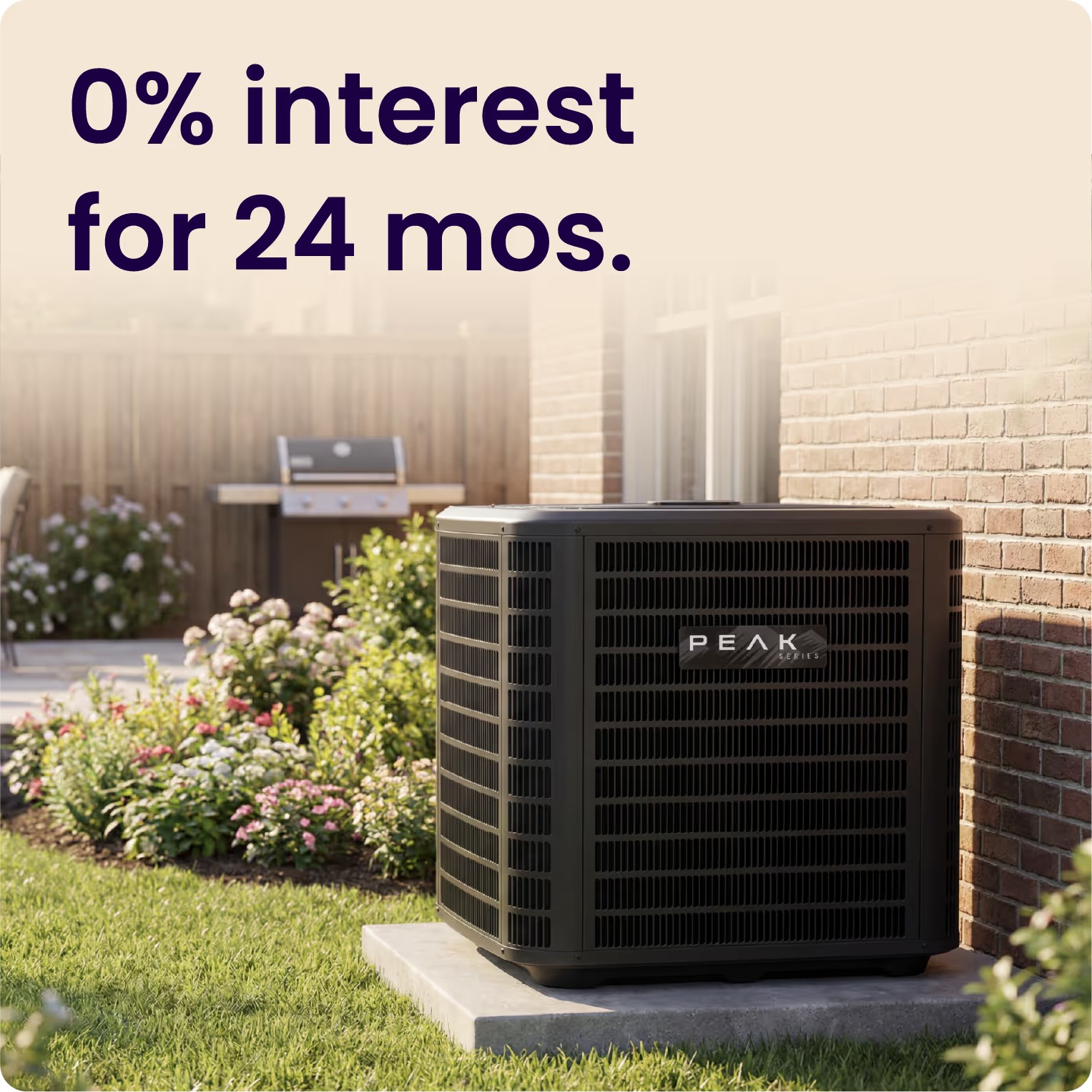
Central AC Installations Available.
Starting at 59/mo.

How can we
help you today?
Contact Us
Call (616) 207-3434 for expert advice, service questions, or to book same-day service.
HVAC Financing
Plans from $59/mo, 0% interest, $0 down. Get pre-approved in minutes.
HVAC Service Pricing
$89 diagnostics, tune-ups from $79, new systems from $99/mo — backed by a 15-year warranty.
Daily HVAC offers.



Why Choose Us
The G.O.A.T.s in Central AC Services
About Central AC

Central AC delivers powerful, whole-home cooling with SEER ratings up to 26 — up to 20% more efficient than standard systems. Advanced airflow and precision humidity control keep every room comfortable, even on the most humid days.

Backed by a 15-year parts & labor warranty, your new AC is built to last. Free estimates, same-day service, and financing from $59/mo make upgrading easy, with no surprises.
Saves up to
20%
on cooling costs with a properly installed, ENERGY STAR certified system
Cuts costs up to
50%
when replacing a unit over 10 years old
Central AC Runs
11%
more efficiently than standard non-certified new models


Friendly service. Certified technicians. Your problem, solved.
From emergency repairs to routine tune-ups, our certified local team is ready to restore your home's comfort quickly, honestly, and at a price you can agree on upfront.
Schedule Online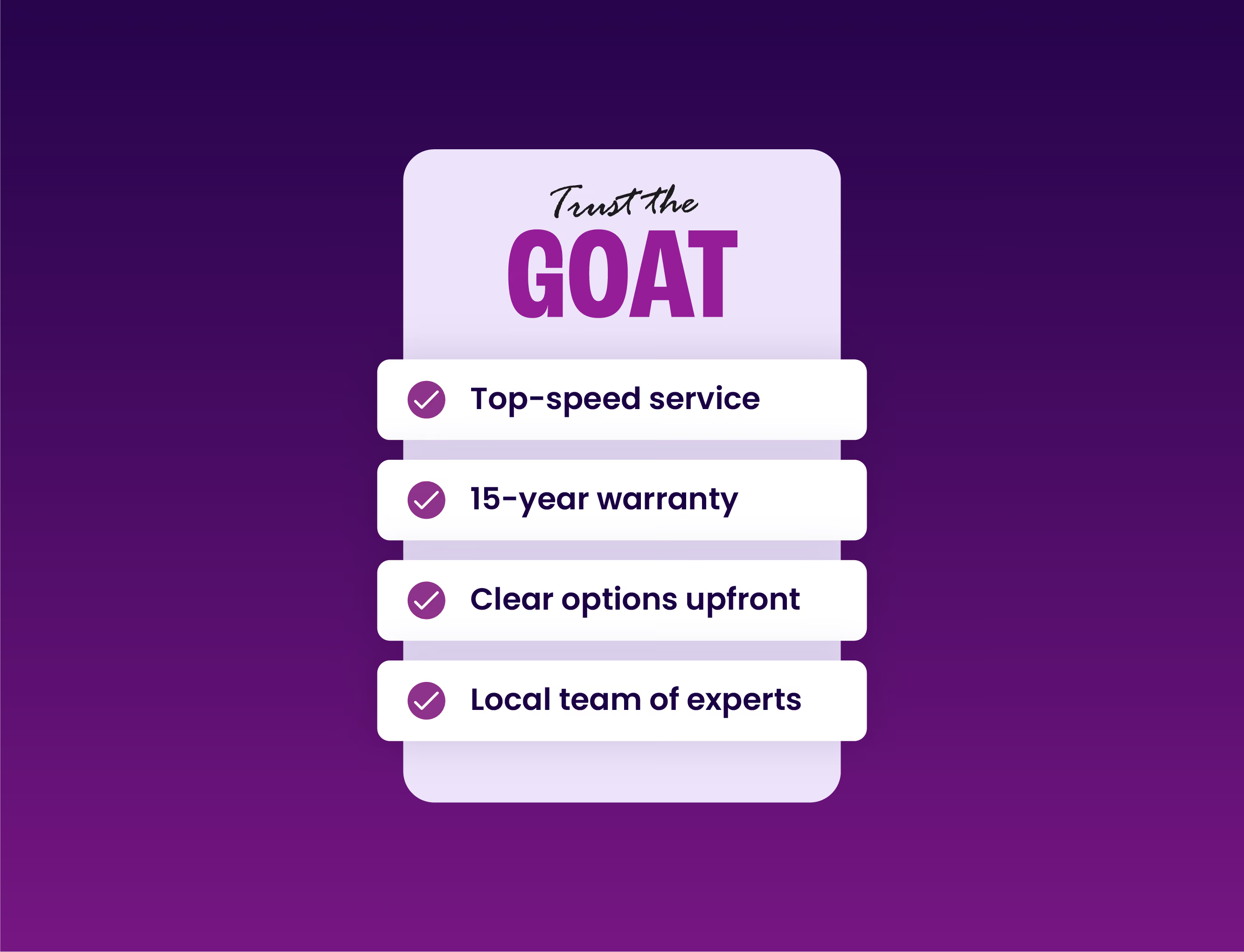
Eyebrow
4.9 On Google · 1,900+ reviews
What your neighbors are saying about the G.O.A.T.s
Michelle S (Elle)
Orchid Blue
Abby D'Valentine
Aaron NJ
Service Areas
See where Peak services HVAC near you.
FAQs
Frequently Asked Central AC Service Questions.
What refrigerant do new central air conditioners use?
The industry has transitioned to lower global warming potential refrigerants for new residential equipment, moving away from R-410A toward A2L refrigerants such as R-454B and R-32 under federal phasedown rules.
What this means if you are buying: new systems are designed around the newer refrigerant from the ground up. It is not a drop in substitution, and the equipment, service tools, and handling requirements differ.
What it means if you already own an R-410A system: nothing urgent. Your system keeps running and remains serviceable. R-410A supply is being reduced over time rather than cut off, so the practical effect is gradually rising cost for recharges on older equipment, which is one more reason not to keep recharging a system with a known leak.
If your system predates that and uses R-22: that refrigerant is no longer produced domestically, supply is reclaimed only, and repairs involving a recharge are expensive.
Your technician confirms exactly what your system uses rather than assuming from its age.
How much does a central air conditioner cost to run?
It comes down to four things: the SEER2 rating, your electricity rate, how many hours it runs, and how much of what it produces actually reaches your rooms.
What raises your bill more than people expect:
- Duct leakage. Conditioned air lost into an attic or crawlspace is paid for and never delivered. This is one of the largest and most overlooked losses in a typical home
- Dirty condenser coil. Heat cannot leave the system efficiently, so the compressor works harder for the same cooling
- Incorrect refrigerant charge, which reduces capacity and efficiency and cannot be detected without gauges
- Oversizing, since a short cycling system never reaches steady state efficiency
- A clogged filter, restricting airflow across the coil
What lowers it: annual maintenance, sealed ducts, a setback schedule, and shading the outdoor unit without blocking airflow.
Worth knowing: the two biggest field losses in installed systems are dirty coils and bad charge, and both are maintenance items rather than equipment problems.
Single stage, two stage, or variable speed, what is the difference?
It is how precisely the system can match its output to what your home needs at that moment.
- Single stage: full output or off. Simple, reliable, and the most affordable. Produces temperature swings and noticeable on and off cycles, and does the least for humidity
- Two stage: runs at roughly two thirds output most of the time and steps up to full only in extreme heat. Longer run times, steadier temperatures, quieter, and better moisture removal
- Variable speed: ramps continuously across a wide range rather than in steps. Holds temperature within about a degree, runs at the lowest output that maintains comfort, and is the quietest and best at dehumidifying
Where the difference is most noticeable: humid climates, homes with rooms that run hot or cold, and anyone sensitive to the blast and silence pattern of a single stage system.
Peak Series maps onto this, stepping up through the lineup to two stage and modulating operation on the upper tiers.
What SEER2 rating should I look for?
SEER2 measures cooling delivered per unit of energy consumed across an entire season, so a higher number means lower operating cost for the same cooling. How high to go depends on how many hours you actually run it.
How to think about the decision:
- Long cooling seasons justify stepping up. More run hours means the efficiency difference compounds faster and the payback arrives sooner
- Short cooling seasons stretch the payback out considerably, and the money is often better spent on duct sealing or insulation
- Rebates and tax credits frequently attach to specific efficiency thresholds, and sometimes the incentive covers much of the step up
What the rating does not tell you: how the system stages. A two stage or variable speed unit runs longer at lower output, which holds temperature steadier and removes more humidity. That comfort difference is often more noticeable day to day than the number on the label.
Peak Series packages step up in SEER2 as you move through the lineup.
What size central air conditioner do I need?
A Manual J load calculation determines it, and Peak performs one on every installation before equipment is ordered. Capacity is measured in tons, and most homes land between two and five.
What the calculation accounts for: square footage, ceiling heights, window count, size and orientation, insulation levels, air leakage, shading, occupancy, and your local summer design temperature. Two identical homes facing different directions can need different capacity.
Why bigger is worse, not safer: an oversized air conditioner cools the air quickly, satisfies the thermostat, and shuts off before it has run long enough to pull humidity out of the house. You get a home that is cold and clammy, plus extra wear from short cycling and higher bills.
Why undersized is also wrong: the system runs continuously on hot days and still falls behind.
What to be wary of: a contractor sizing by square footage alone, or simply matching whatever is out there now. A large share of existing systems were sized by rule of thumb and are wrong.
Central air or a mini split, which is right for my home?
The deciding factor is usually whether you already have sound ductwork.
Central air makes sense when:
- Your home already has ducts in reasonable condition
- You want one thermostat and one system for the whole house
- You want no indoor equipment visible in living spaces
- You are pairing it with a furnace that shares the same blower and ducts
A mini split makes sense when:
- The home has no ductwork, or adding it would mean tearing into finished ceilings
- You want different temperatures in different rooms
- You are conditioning an addition, garage, basement, or converted attic
- One or two rooms are the actual problem, not the whole house
The combination is common: keep central air for the main house and add a mini split for the space it has never handled well. That is usually cheaper than upsizing the central system.
We look at your ducts before recommending either.
What are the main parts of a central AC system?
A central air conditioner is really two halves that have to be matched to each other.
Outdoors, the condensing unit: the compressor, which drives the whole cycle and is the most expensive single component, the condenser coil that releases heat, and a fan that pulls air across it.
Indoors, on or in the furnace or air handler: the evaporator coil that absorbs heat from your air, the blower that moves air through the ducts, the filter, and the condensate drain and pan.
Connecting them: the refrigerant line set, a pair of insulated copper lines running between indoor and outdoor.
Plus the controls: the thermostat, the electrical disconnect at the outdoor unit, the contactor and capacitor, and the safety switches.
The pairing point that gets skipped: the outdoor unit only achieves its rated efficiency with the indoor coil it was designed for. Replacing just the condenser is one of the most common reasons a new system underperforms.
What is a central air conditioning system and how does it work?
A central air conditioner cools your entire home from one system and distributes the cooled air through ductwork. It does not create cold air. It moves heat out of your house.
The cycle, in plain terms: warm indoor air is pulled into the return, passed across a cold evaporator coil where the refrigerant absorbs its heat, and the cooled air is pushed back out through the supply registers. The refrigerant carries that heat outdoors to the condenser, where the compressor and fan release it into the outside air. Then it repeats.
A useful byproduct: as warm humid air contacts the cold coil, moisture condenses out and drains away. That is why a properly running system makes a house feel less sticky, not just cooler.
Why the ducts matter as much as the equipment: everything the system produces travels through them. Leaky or undersized ducts cap what even the best air conditioner can deliver.
Still have questions?
Lorem ipsum dolor sit amet, consectetur adipiscing elit.
