
Peak Series
FurnaceInstallation
Payment plans available.1
Starting at 0% Interest. $0 down payment. 2

How can we
help you today?
Contact Us >
Contact our customer service team for HVAC service support, financing questions, additional concerns.
HVAC Financing >
Compare Peak financing options, payment plans. Get pre-approved, without taking a credit-score hit.
Offers >
See latest HVAC deals, zero-interest promotions, and limited-time system replacement offers.
Daily HVAC offers.
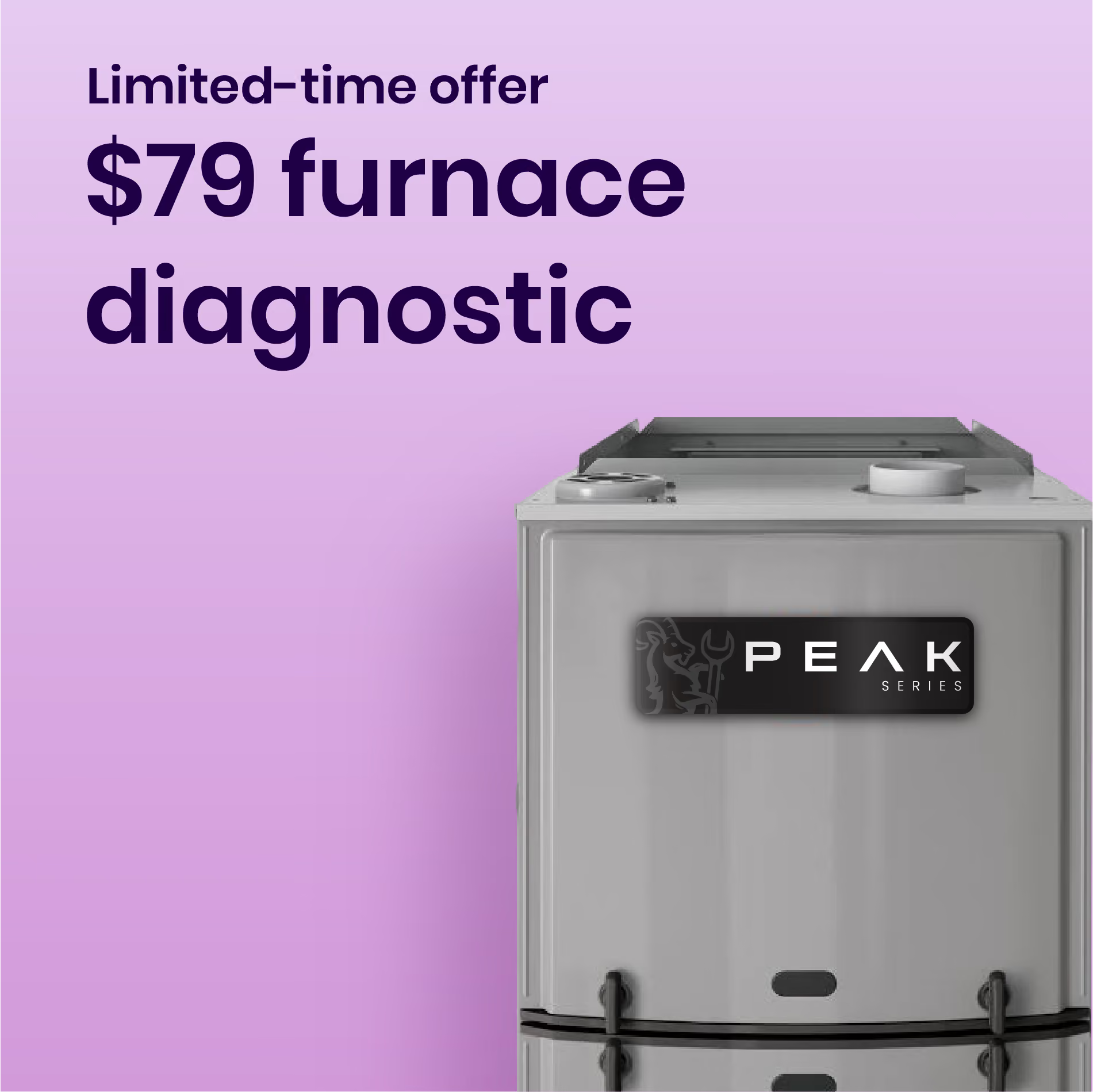
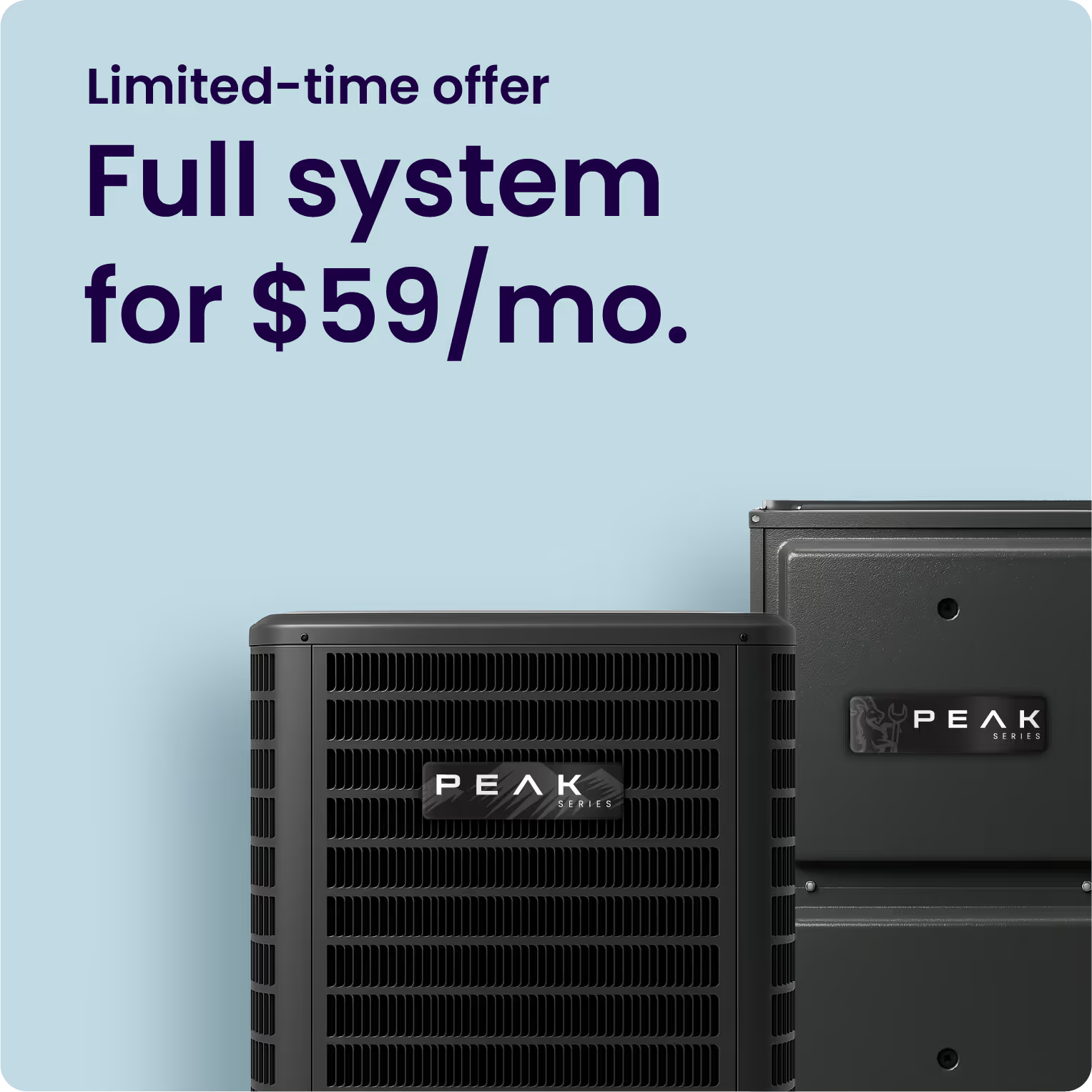
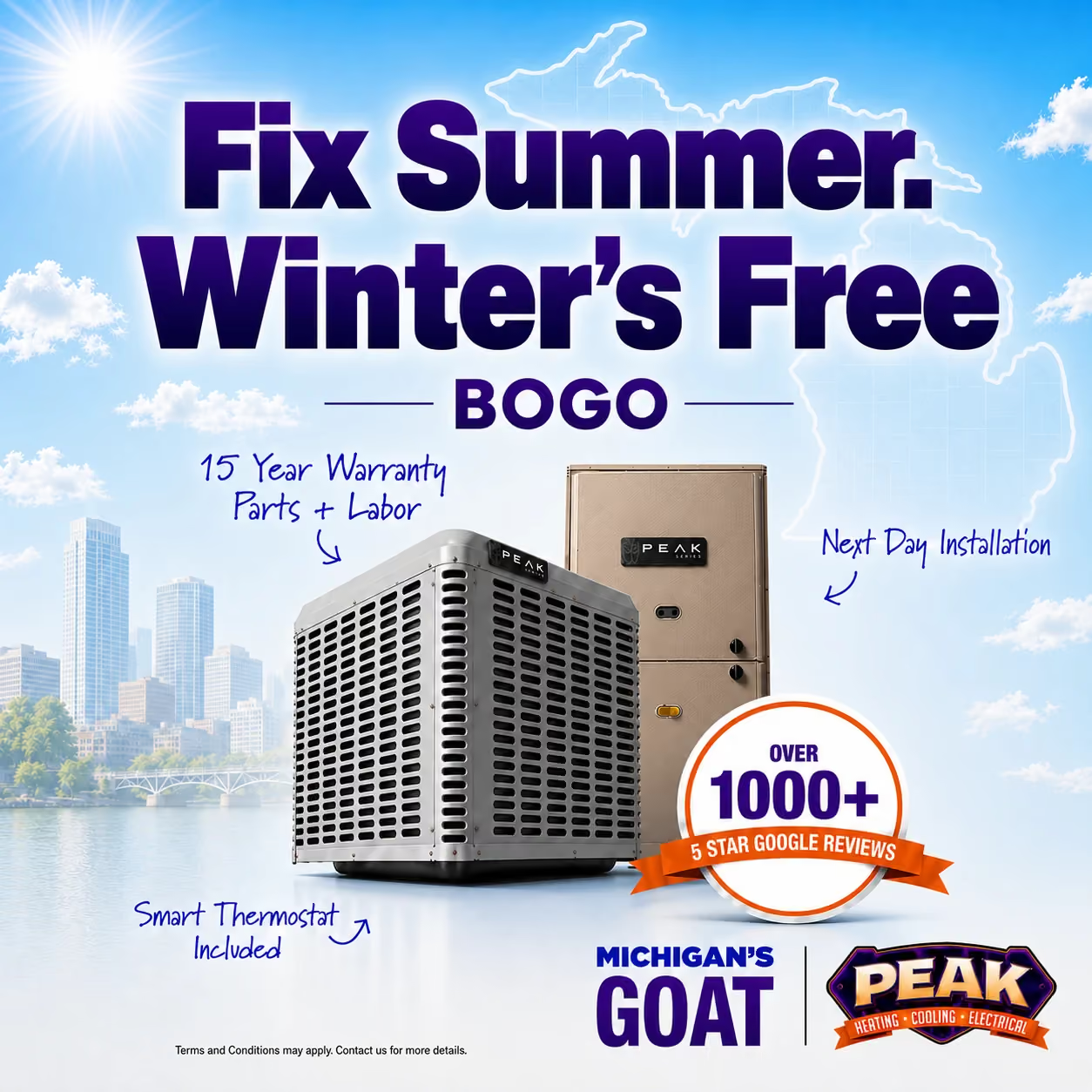
Here's what to EXPECT when you get an estimate.
No guesswork, no surprise fees. Here's exactly what happens from the first call to the final walkthrough — same-day service, every step explained.

Step 1
Book online or call 24/7
Tell us what's happening and grab the next available two-hour arrival window that works for you.
Step 2
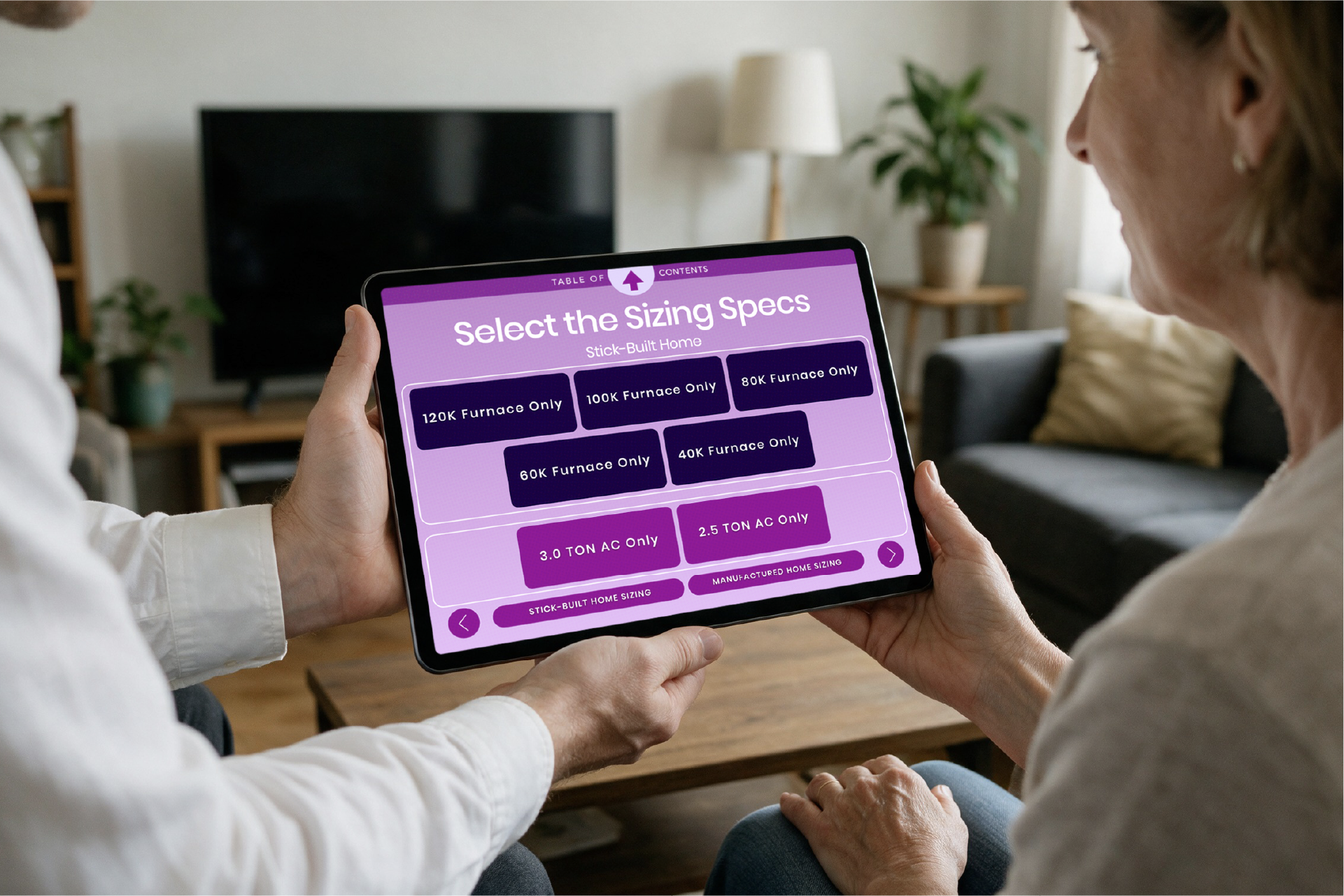
Transparent quote
Itemized pricing for equipment, labor, and parts — plus flexible financing. Zero hidden fees.
Step 3
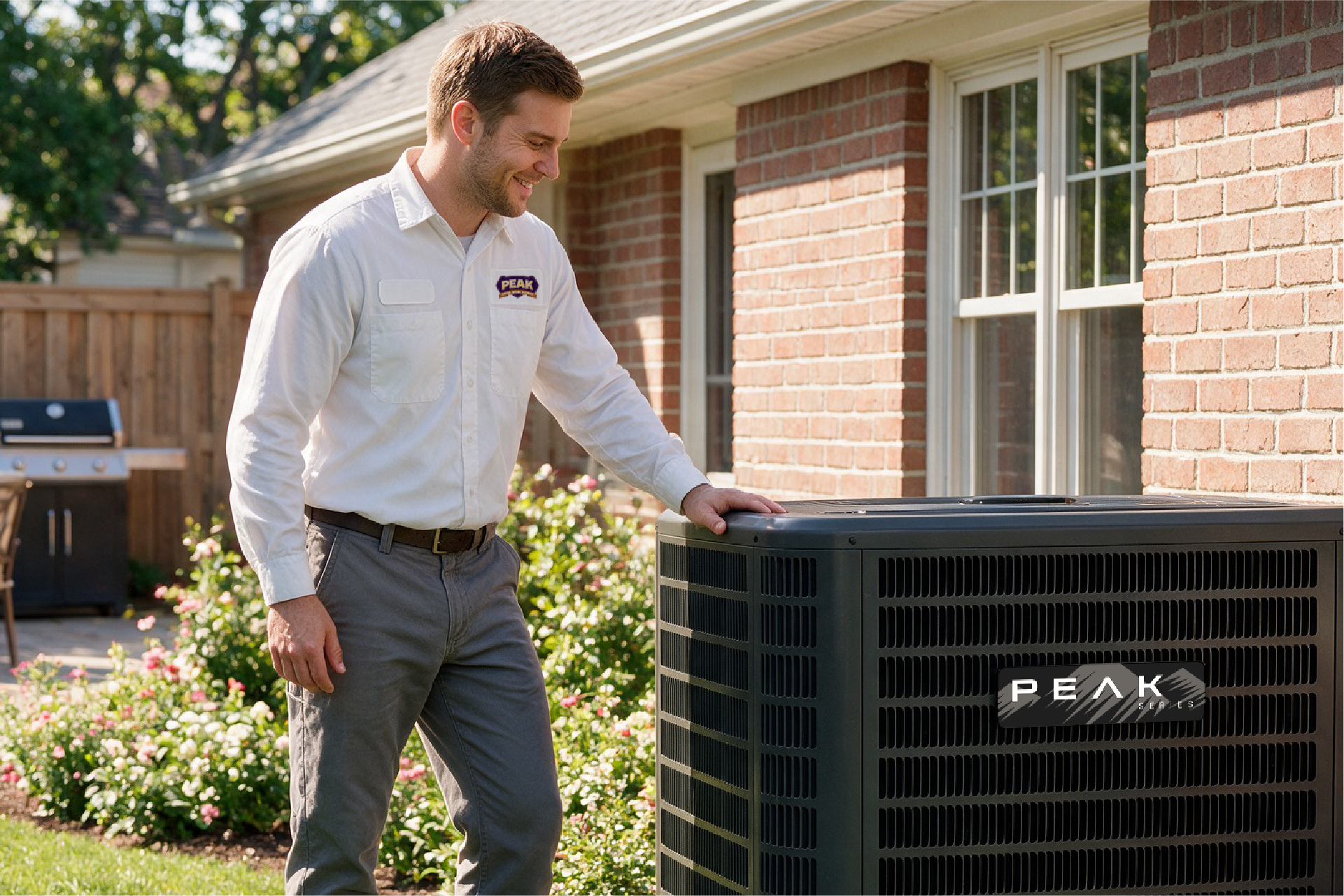
Professional install
Certified, background-checked techs install cleanly, haul away the old unit, and protect your floors.

Step 4
Walkthrough & warranty
We test everything, show you how it runs, and register your 15-year parts warranty on the spot.
A closer look at your new Peak Series Furnace.

Insulated blower compartment for thermal and acoustic performance, ensuring quieter heating operation and improved energy efficiency.

Internal condensate trap design provides condensate management options, ensuring reliable heating performance and flexible furnace installation options.

Designed for flexibility, our Peak Series furnaces easily adapt to upflow, horizontal, or downflow installations with minimal conversion. This versatility makes the Peak Series furnaces a perfect fit for any home layout, simplifying installation, reducing time and cost on both installation and maintenance, all while maintaining optimal heating performance.
Flexible Furnace Install Payment Plans
Comfort first, pay later. Opt for our flexible payment plans with payments as low as $99/month.
Furnace Trade-Ins Available
Trade in your old HVAC system and get up to $200 off or use your Peak Club Annual Trade-In Credit for greater savings.
Three furnace operating options.

Single Stage

Two Stage

Modulating
AFUE Modulating
15.2 SEER2 Rating
Wi-fi Smart Thermostat
Warranty Parts + Labor
1
2
3
4
5
Long-Term Cost
Efficiency
Comfort
Warranty
Technology
These ratings are subjective and may vary based on individual usage, needs, and preferences.
If you want the smoothest, quietest, and most efficient heating available, the Deluxe furnace is it. With a 98% AFUE modulating system, it adjusts heat output in real time to match your home’s exact needs. That means consistent warmth, no swings in temperature, and serious savings on gas bills. You’ll also notice how whisper-quiet it runs—even in the coldest parts of winter.
Deluxe
AFUE Two-Stage
15.2 SEER2 Rating
Wi-fi Smart Thermostat
Warranty Parts + Labor
1
2
3
4
5
Long-Term Cost
Efficiency
Comfort
Warranty
Technology
These ratings are subjective and may vary based on individual usage, needs, and preferences.
The Comfort+ gives you the best of both worlds: a two-stage gas valve for improved efficiency, and a variable-speed blower for superior airflow and humidity control. With a 96% AFUE rating, this system reduces waste and delivers steady, comfortable heat without the frequent on-off cycling of older units. It’s perfect for families who value comfort, reliability, and efficiency in colder Michigan months.
Comfort Plus
AFUE Single-Stage
14.3 SEER2 Rating
Wi-fi Smart Thermostat
Warranty Parts + Labor
1
2
3
4
5
Long-Term Cost
Efficiency
Comfort
Warranty
Technology
These ratings are subjective and may vary based on individual usage, needs, and preferences.
Our Comfort package is a workhorse—96% AFUE single-stage performance that keeps your home warm without overcomplicating things. If you’re upgrading from an older furnace, you’ll see an immediate difference in both energy bills and air quality. It’s a smart pick for homeowners who want trusted heating performance and better efficiency at a great price.
Comfort
AFUE Single-Stage
13.4 SEER2 Rating
Wi-fi Smart Thermostat
Warranty Parts + Labor
1
2
3
4
5
Long-Term Cost
Efficiency
Comfort
Warranty
Technology
These ratings are subjective and may vary based on individual usage, needs, and preferences.
Don’t let the word “economy” fool you—this 92% AFUE furnace is built to last. It offers dependable, single-stage heating and simple controls that get the job done without extra bells and whistles. It’s ideal for smaller homes, rentals, or those looking to replace an aging furnace without overspending.
Economy
AFUE Single-Stage
13.4 SEER2 Rating
Wi-fi Smart Thermostat
10 + 1 Year Warranty
1
2
3
4
5
Long-Term Cost
Efficiency
Comfort
Warranty
Technology
These ratings are subjective and may vary based on individual usage, needs, and preferences.
Designed for contractors and new construction, the Builders furnace delivers essential heating at 92% AFUE. It includes the same safety features and core functionality as higher-tier models but skips advanced features to keep costs low. It’s ideal for homeowners who want an entry-level system backed by professional installation and support.
Builders
AFUE Single-Stage
13.4 SEER2 Rating
Wi-fi Smart Thermostat
Only Parts Warranty
1
2
3
4
5
Long-Term Cost
Efficiency
Comfort
Warranty
Technology
These ratings are subjective and may vary based on individual usage, needs, and preferences.
Essentials is just that—the essential solution when you need heat now. It’s a 92% AFUE single-stage furnace that’s efficient, durable, and gets the job done without fluff. Whether it's a rental property or a quick turnaround install, this is a furnace you can trust for day-to-day performance.
Essentials

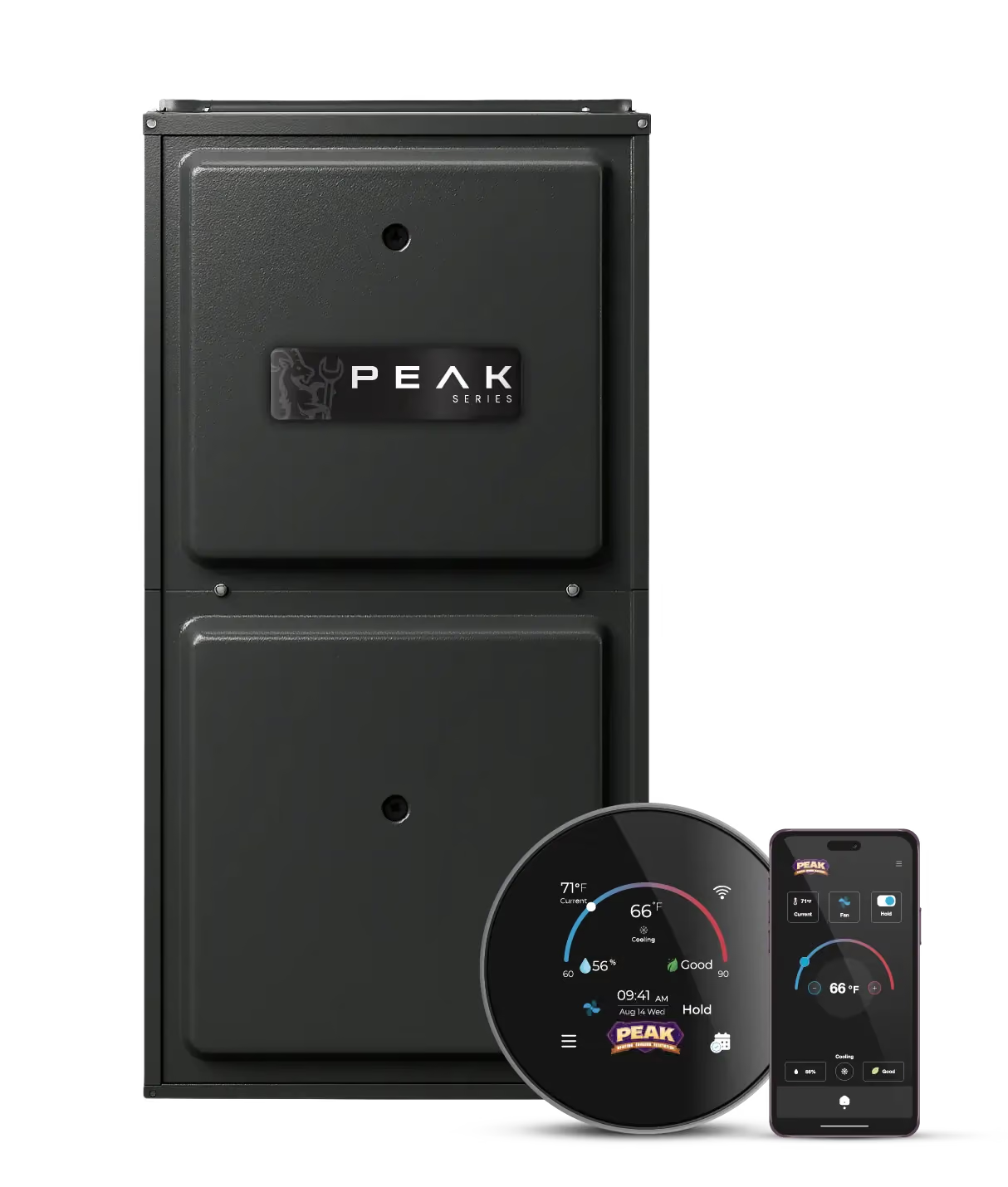
Aura Smart Thermostat
Learn more about our Peak Series Aura Smart Thermostat. A smart thermostat that does it all, and saves you money on heating and cooling energy bills.
Peak Furnace Heating Repair
Is your furnace not working as it should? Peak Heating and Cooling provides the fastest, reliable furnace repair services to get your system back on track.

Peak Furnace Heating Maintenance
Peak Heating and Cooling will service your heating systems to ensure your furnace operates at its most efficient potential on top of keeping your air quality clean.
Energy savings
Save up to 34% on
your heating bills.
Look forward to additional energy savings with your new Peak Series furnace that's perfectly designed for and sized to your home.
The percentage savings are based on the Peak Series DELUXE furnace. Not guaranteed; actual savings depend on usage, home, and maintenance.

American built furnaces.
American quality.
Our Peak Series furnaces are proudly American made. That means you can keep your peace of mind knowing that it was built to the highest standards. We trust the quality of our furnaces so much that we can confidently offer our industry-leading 15-year warranty on our Peak Series furnaces.
Same-day, next-day furnace installation
When you need heating, we know it's urgent. That's why we offer same-day and next-day furnace installations to make sure your home remains warm and comfortable without too long of a wait.

Eyebrow
4.9 On Google · 1,900+ reviews
What your neighbors are saying about the G.O.A.T.s
Dan Vakhitov
Cutting Edge Innovation Station
Chad Collins
Bob Brooks
Service Areas
See where Peak services HVAC near you.
Discover More Services
Home services directly from PEAK.
Offers & Promotions
Current rebates and seasonal discounts on HVAC and electrical work.
Pay Monthly at 0% APR
Finance your new system with no interest, ever.
Maintenance Plans
Scheduled tune-ups and priority service, year-round.
Service Areas
Check if Peak covers your neighborhood.
Service Pricing
Upfront pricing before work begins—no surprises.
Reviews
Real feedback from homeowners who trust Peak.
Furnace Repair
Fast diagnostics and lasting repairs, any furnace type.
Furnace Tune-Ups
Seasonal tune-ups to keep your furnace running efficiently.
Furnace Installs
Expert sizing and fast installation of a new furnace.
Furnace Replacements
Honest repair-vs-replace guidance, backed by 15-year warranties.
Water Heater Installs
Same-day installation of a new, efficient water heater.
Peak Aura Thermostat
Smart temperature control, installed and set up for you.
AC Repair
Fast diagnostics and lasting repairs, any AC type.
AC Tune-Ups
Seasonal tune-ups to keep your AC running efficiently.
AC Installs
Expert sizing and fast installation of a new AC.
AC Replacements
Honest repair-vs-replace guidance, backed by 15-year warranties.
Peak Aura Thermostat
Discover home HVAC, electrical service offers for your home.
FAQs
Frequently Asked Furnace Installation Service Questions.
Can I install a new furnace and keep my existing air conditioner?
Yes, and it is a common and reasonable choice when the air conditioner still has meaningful life left. The furnace houses the blower and the indoor evaporator coil sits on top of it, so the two are physically connected but not required to be replaced together.
What we verify before recommending it:
- The existing coil is in good condition and can be reused or transferred
- The cabinet dimensions of the new furnace fit the existing coil and plenum
- The new blower matches the airflow requirement of the existing air conditioner
- The existing refrigerant lines are sound and correctly sized
The honest caveat: variable speed and modulating comfort features work best when both halves are designed together. Pairing a high end furnace with an older basic air conditioner still improves your heating, but you will not get the full comfort benefit on the cooling side.
If your air conditioner is within a few years of replacement anyway, we will say so and let you weigh it.
When is the best time of year to install a new furnace?
Late spring through early fall. Installing outside the heating season means flexible scheduling, no rush, and no night without heat while you wait for equipment. It also gives you time to compare options rather than making a decision under pressure during a failure.
The situation to avoid: replacing a furnace during the first cold snap of the year. That is when demand spikes, schedules compress, and homeowners end up choosing whatever can be installed fastest rather than what fits the home best.
We install year round and treat no heat situations as emergencies, so a winter failure is handled promptly. But if your furnace is aging and you already suspect this is its last season, planning the replacement in warm weather is the better path in every respect.
A practical planning note: if the air conditioner is also near end of life, replacing both together during the shoulder season saves labor and gives you a matched system with a single warranty term.
Do I need a permit to install a furnace?
Almost always, yes. Furnace installation involves gas, venting, and electrical work, which building departments regulate closely, and a permit with inspection is the standard requirement in most jurisdictions. Peak pulls the permit, coordinates the inspection, and handles the documentation.
Why this one matters more than most: furnace work involves combustion. Improper venting can allow carbon monoxide into the living space, and an incorrectly sized gas line can starve the appliance. Inspection exists specifically to verify those items.
The practical consequences of unpermitted work also add up:
- Home sales frequently stall when inspectors find unpermitted mechanical work
- Insurance and warranty claims can ask whether the installation was permitted
- Utility rebates and tax credits often require documentation of a licensed, permitted install
Requirements vary by state and municipality. Your comfort advisor confirms what applies at your address before the job is scheduled, and permit handling is part of the quoted installation rather than a line item added later.
How do I know what size furnace my home needs?
A Manual J load calculation determines it, and Peak performs one on every installation before ordering equipment. Furnace capacity is measured in BTUh of heat input, and residential units commonly range from roughly forty thousand to one hundred twenty thousand BTUh.
The calculation accounts for square footage, ceiling height, insulation levels in walls and attic, window count, type and orientation, air infiltration, and your local winter design temperature. Two homes of identical square footage in different climates need different furnaces, and two identical homes in the same climate can differ if one has been air sealed and the other has not.
Why oversizing is the common mistake: an oversized furnace heats quickly, satisfies the thermostat, and shuts off, producing short cycles, uneven room temperatures, more noise, and additional wear on the ignition and heat exchanger. Bigger is not safer, it is worse.
We walk you through the calculation result and explain what it means rather than simply naming a size.
What is the difference between single stage, two stage, and modulating furnaces?
The difference is how precisely the furnace can match its output to what your home actually needs at that moment.
- Single stage: full output or off. Simple, reliable, and the most affordable. Produces larger temperature swings and more noticeable on and off cycles.
- Two stage: runs at roughly the sixty to seventy percent range most of the time and switches to full output only in severe cold. Longer, gentler cycles, steadier temperatures, quieter operation, and better efficiency in real conditions.
- Modulating: adjusts output continuously across a wide range rather than in steps. Holds indoor temperature within about a degree, runs at the lowest output that maintains comfort, and is the quietest of the three.
Peak Series maps directly onto this: the Essentials through Comfort tiers use single stage furnaces, Comfort Plus steps up to two stage, and the Deluxe tier uses a modulating furnace. The comfort difference is most noticeable in homes with rooms that run hot or cold, and in long, cold heating seasons.
What does AFUE mean and how high should mine be?
AFUE stands for Annual Fuel Utilization Efficiency, and it is the percentage of fuel energy your furnace converts into usable heat across a heating season. A furnace at ninety two percent AFUE delivers ninety two cents of heat for every dollar of gas, and loses the remainder through the flue.
The practical breakpoint is condensing versus non condensing. Furnaces in the low nineties are non condensing and vent conventionally. Furnaces in the mid nineties and above are condensing, extract additional heat from the exhaust, and vent through PVC with a condensate drain.
Peak Series packages start at ninety two percent AFUE on the Essentials, Builders, and Economy tiers and step up through the mid nineties on Comfort and Comfort Plus, reaching the highest efficiency and modulating operation on the Deluxe tier.
How to choose: the colder your climate and the longer your heating season, the more a higher AFUE returns. In mild climates the payback stretches out considerably.
How long does it take to install a new furnace?
Most furnace installations are completed in one day, typically six to nine hours. A direct replacement using the existing venting and gas line sits at the short end. Several conditions extend the timeline:
- Venting changes when moving from a chimney vented furnace to a high efficiency condensing model that requires new PVC venting and a condensate drain
- Gas line modifications if the existing line is undersized for the new input rating
- Electrical work to bring the circuit or disconnect up to code
- Ductwork changes called for by the load calculation
- Chimney lining when a shared flue no longer works after the furnace is removed from it
Full system replacements that include the air conditioner generally run one to two days. Your comfort advisor confirms the expected scope and timeline in writing before install day, and if something on site changes the plan, you hear about it before the work proceeds.
What is included in a new furnace installation?
A Peak furnace installation covers the complete heating side of the system, not just the cabinet. That includes the new furnace, connection to the existing or upgraded gas line, venting and flue work, electrical connections, condensate drainage on high efficiency models, a new filter, and the Aura smart thermostat at no extra charge.
Every installation also includes a Manual J load calculation performed before the equipment is ordered, a full duct cleaning, permits and inspection where required, removal and disposal of the old furnace, warranty registration, and a post install walkthrough.
The venting detail that matters: high efficiency condensing furnaces, generally those in the mid nineties AFUE and above, do not vent through a traditional chimney. They vent through PVC to a sidewall or roof and produce acidic condensate that must be drained properly. If you are moving from an older mid efficiency furnace, that venting change is part of the job and part of the quote you receive up front.
Still have questions?
Lorem ipsum dolor sit amet, consectetur adipiscing elit.
