




Protect Your Indoor Air Quality With a Wildfire Smoke Air Purifier
If you've noticed a hazy sky or caught a whiff of smoke drifting through your neighborhood during wildfire season, you might be wondering whether your home's indoor air is truly safe. The unfortunate reality is that wildfire smoke doesn't just stay outside; it can seep through windows, doors, and even your HVAC system, compromising the air you and your family breathe every day. With wildfire seasons becoming longer and more intense, protecting your indoor air quality has never been more important.
Understanding the Health Risks of Wildfire Smoke Indoors
Wildfire smoke is far more dangerous than it appears. It contains fine particulate matter known as PM2.5, which refers to tiny particles that are 2.5 micrometers or smaller in diameter. These microscopic particles are so small that they can bypass your body's natural defenses and penetrate deep into your lungs and even enter your bloodstream.
Beyond particulate matter, wildfire smoke carries a cocktail of harmful toxins, including carbon monoxide, volatile organic compounds (VOCs), and other chemicals produced when trees, structures, and plastics burn. For vulnerable populations such as children, the elderly, and those with existing respiratory conditions like asthma or COPD, exposure to these pollutants can trigger serious health complications, including difficulty breathing, aggravated heart conditions, and increased susceptibility to respiratory infections.
Even if you keep your windows closed, outdoor smoke can infiltrate indoor spaces through gaps around doors and windows, through your HVAC system, or whenever someone enters or exits your home. This makes having a comprehensive air quality strategy essential for keeping your family safe during wildfire season.
How Air Purifiers Combat Wildfire Smoke
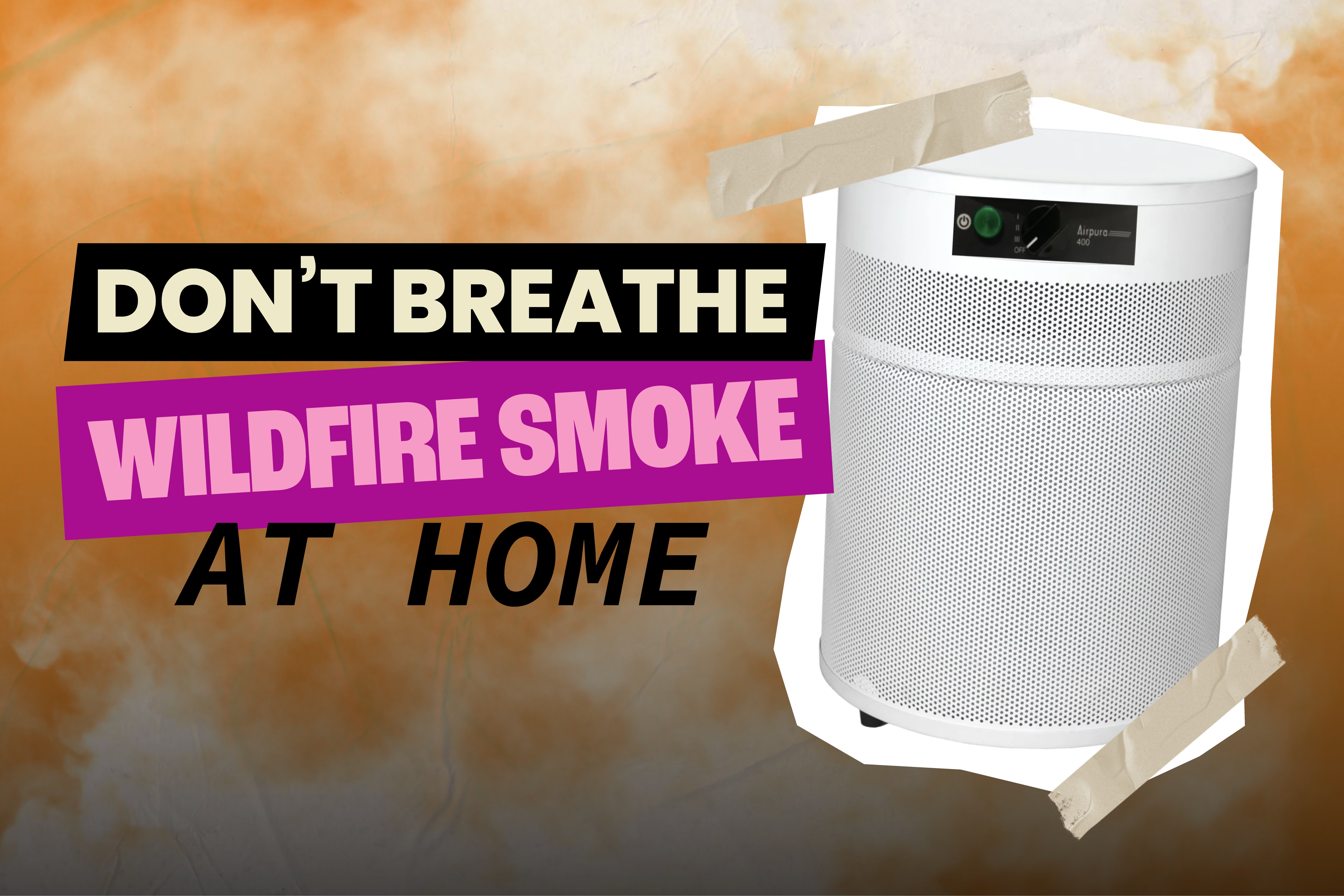
Air purifiers have become one of the most effective tools homeowners can use to fight back against wildfire smoke infiltration. The key to their effectiveness lies in specialized filtration technology designed to capture the tiniest and most harmful particles.
HEPA (High-Efficiency Particulate Air) filters are the gold standard when it comes to removing fine particulate matter from indoor air. True HEPA filters can capture 99.97% of particles as small as 0.3 micrometers, which means they're highly effective at trapping the PM2.5 particles that make wildfire smoke so dangerous. When air passes through a HEPA filter, these particles get caught in the dense web of fibers, preventing them from recirculating through your home.
However, HEPA filters alone don't address every component of wildfire smoke. That's where activated carbon filters come in. These filters are specifically designed to absorb odors and gaseous pollutants, including the VOCs and chemical fumes that give wildfire smoke its distinctive and unpleasant smell. When combined with HEPA filtration, activated carbon creates a comprehensive defense against both the visible and invisible threats of wildfire smoke.
Many modern air purification systems can integrate directly with your existing HVAC system, allowing you to treat the air throughout your entire home rather than just a single room. This whole-home approach ensures consistent air quality in every corner of your living space and works seamlessly with your heating and cooling equipment.
Types of Air Purification Solutions for Wildfire Protection
When it comes to protecting your home from wildfire smoke, you have several options to consider, each with its own advantages depending on your home's size, layout, and your family's specific needs.
Whole-home air purifiers are installed directly into your HVAC system and treat all the air that circulates through your home. This approach offers the most comprehensive protection because it addresses air quality at the source, filtering air before it's distributed to every room. Whole-home systems are particularly effective during wildfire season because they work continuously with your heating and cooling system to maintain clean air throughout your entire living space.
Portable air purifiers, on the other hand, are standalone units that can be moved from room to room as needed. While they're generally less expensive upfront and offer flexibility, they only treat the air in the immediate area where they're placed. For homes with open floor plans or multiple levels, you might need several portable units to achieve adequate coverage.
Another option worth considering is upgrading your HVAC system's existing filters. Standard filters typically have a MERV (Minimum Efficiency Reporting Value) rating between 1 and 4, which captures larger particles like dust and pollen but does little against fine particulate matter. During wildfire season, upgrading to filters with a MERV rating between 11 and 13 can significantly improve your system's ability to capture smaller particles. However, it's important to consult with a professional before making this upgrade, as higher-rated filters can restrict airflow in systems not designed to accommodate them, potentially causing damage or reducing efficiency.
For homeowners looking to make a comprehensive investment in their home's air quality, HVAC-integrated air quality systems combine multiple technologies, including HEPA filtration, UV lights to kill biological contaminants, and activated carbon filters for odor and gas removal. These systems represent the pinnacle of indoor air protection and can address not just wildfire smoke but year-round air quality concerns.
Additional Steps to Protect Indoor Air Quality During Wildfire Season
While air purifiers are powerful tools, they work best as part of a broader strategy to keep wildfire smoke out of your home. Taking a few additional precautions can dramatically improve your indoor air quality during wildfire events.
Keeping windows and doors sealed is your first line of defense. Even a small gap can allow smoke-laden outdoor air to enter your home. Check weather stripping around doors and windows, and consider using door sweeps to seal gaps at the bottom of exterior doors. If you notice drafts or can see daylight around door or window frames, these areas need to be addressed.
Your HVAC system likely has a recirculation mode that allows it to cycle indoor air without drawing in fresh outdoor air. During periods of heavy smoke, switching to recirculation mode prevents your system from pulling contaminated outdoor air into your home. Just be mindful that you'll want to return to normal operation once air quality improves to prevent indoor air from becoming stale.
Regular filter changes become even more critical during wildfire season. Smoke particles can quickly clog filters, reducing their effectiveness and forcing your HVAC system to work harder. If you're experiencing prolonged exposure to wildfire smoke, you may need to change your filters more frequently than usual. This is where having a maintenance plan can be invaluable, ensuring your system receives the attention it needs when you need it most.
Monitoring the Air Quality Index (AQI) in your area helps you make informed decisions about when to keep windows closed, when to run air purifiers at higher settings, and when it's safe to ventilate your home with fresh outdoor air. Many weather apps and websites provide real-time AQI data, with color-coded scales that make it easy to understand current conditions at a glance.
If you have ducts in your home, ensuring they're clean and well-sealed can prevent contaminated air from spreading throughout your living space. Air duct cleaning removes accumulated dust, debris, and particles that can harbor contaminants and compromise your indoor air quality. Understanding why it's important to maintain your ducts and vents can help you make informed decisions about your home's overall air quality strategy.
Why Professional Installation and Maintenance Matters
While portable air purifiers are relatively straightforward to set up, whole-home air purification systems require professional expertise to ensure they're installed correctly and functioning optimally. Improper installation can lead to reduced effectiveness, increased energy consumption, and even damage to your HVAC system.
A professional assessment from Peak Heating and Cooling can help you understand your home's specific air quality needs. Factors like your home's size, layout, existing HVAC equipment, and local air quality concerns all play a role in determining the best solution for your situation. Our team can evaluate your current system, recommend appropriate upgrades or additions, and ensure everything is sized and installed correctly.
Proper sizing is particularly important when it comes to air purification. An undersized system won't adequately clean your home's air, while an oversized system may cycle on and off too frequently, reducing its effectiveness and efficiency. The placement of air purifiers and the integration of filtration systems with your existing HVAC equipment require technical knowledge to maximize performance.
Ongoing maintenance is just as important as proper installation. Even the best air purification systems need regular attention to continue operating at peak performance. Filters need to be changed on schedule, components need to be inspected, and systems need to be adjusted as conditions change. With a Peak maintenance plan, you can rest easy knowing your air quality equipment receives the care it needs to protect your family year-round.
Professional maintenance also extends the life of your equipment and helps prevent unexpected breakdowns. During routine service visits, technicians can identify potential issues before they become major problems, saving you money and ensuring your home remains protected when you need it most.
Breathe Easier With Professional Air Quality Solutions
Wildfire season doesn't have to mean compromising on the air quality inside your home. With the right combination of air purification technology, smart HVAC practices, and professional guidance, you can create a safe indoor environment for your family regardless of what's happening outside.
Whether you're dealing with an immediate wildfire threat or want to prepare your home for future smoke events, Peak Heating and Cooling is here to help. Our team has the expertise to assess your home's unique needs, recommend effective solutions, and ensure your air quality systems are installed and maintained properly.
Don't wait until smoke fills the sky to think about your indoor air quality. Schedule an appointment with Peak Heating and Cooling today to discuss air purification options for your home. Your family's health and comfort are too important to leave to chance, and we're committed to helping you breathe easier all year long.